An 1818 Fabricatore Guitar
In February 2020, I was contacted by the Royal Academy of Music in London who asked if I would consider working on one of their old guitars which formerly had been used in concert but had become unplayable. I visited the Academy and was shown the guitar in question. It is a six string guitar made in Naples in 1818 by Gennaro Fabricatore. The Academy's webpage for this guitar is:
Gennaro Fabricatore Guitar
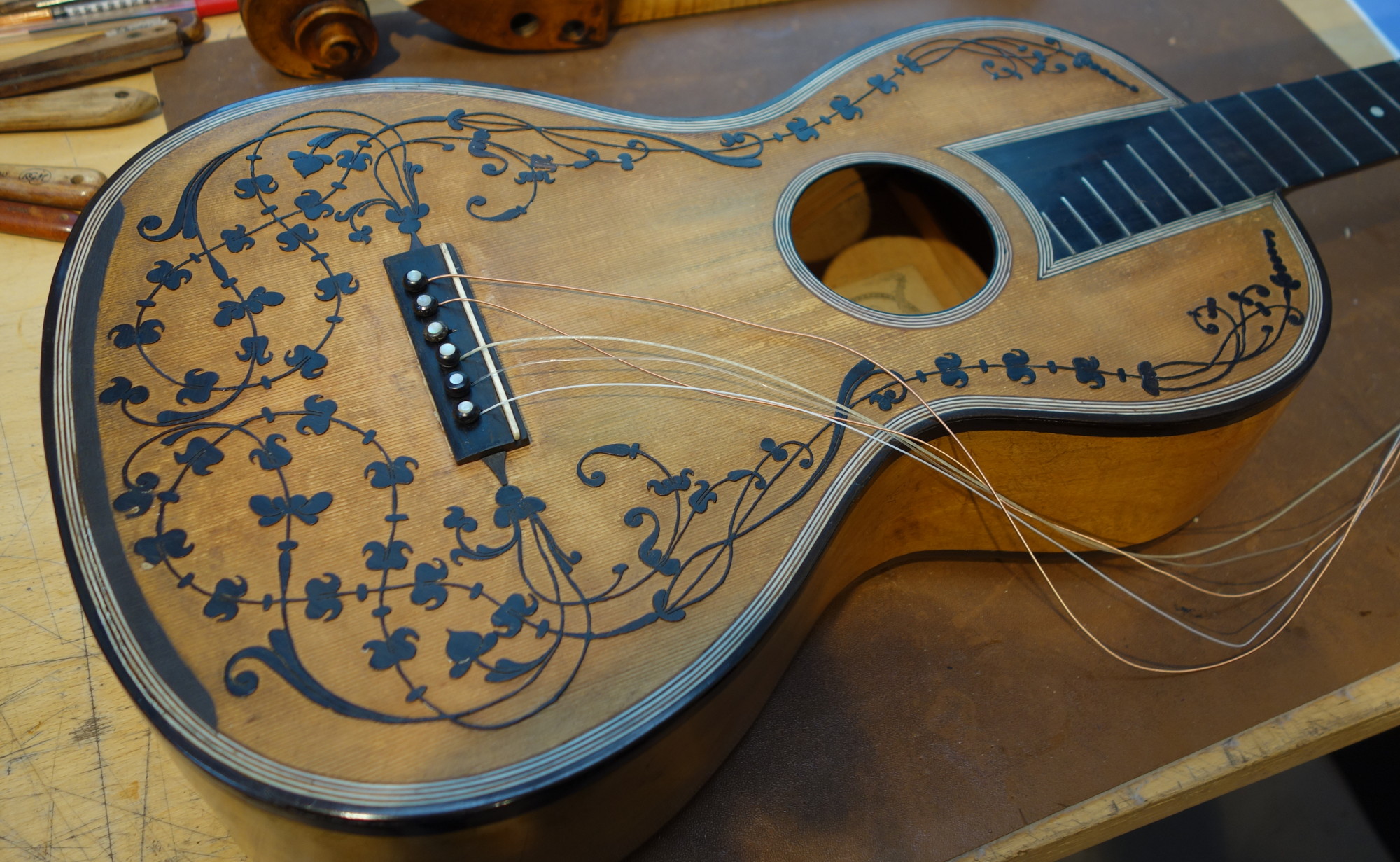
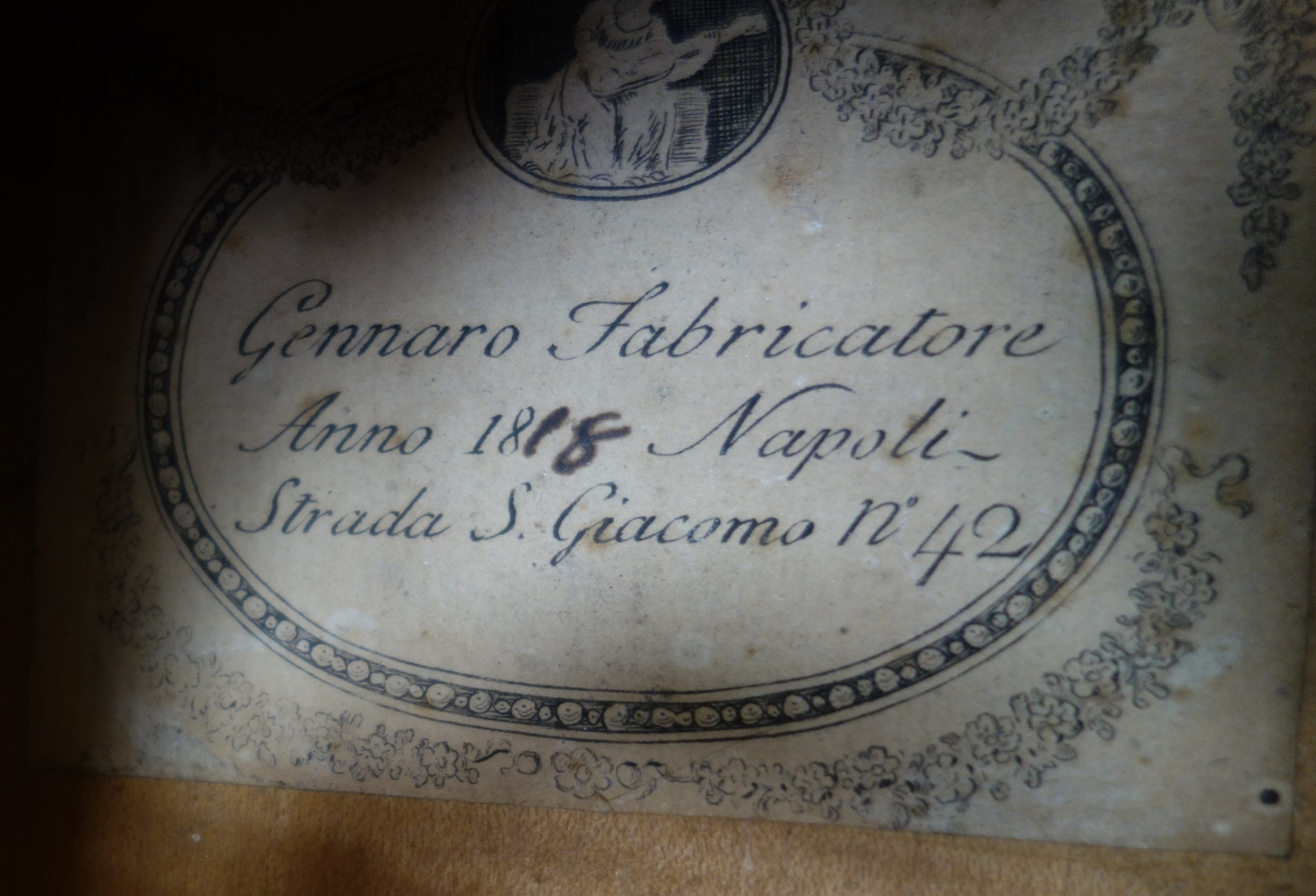
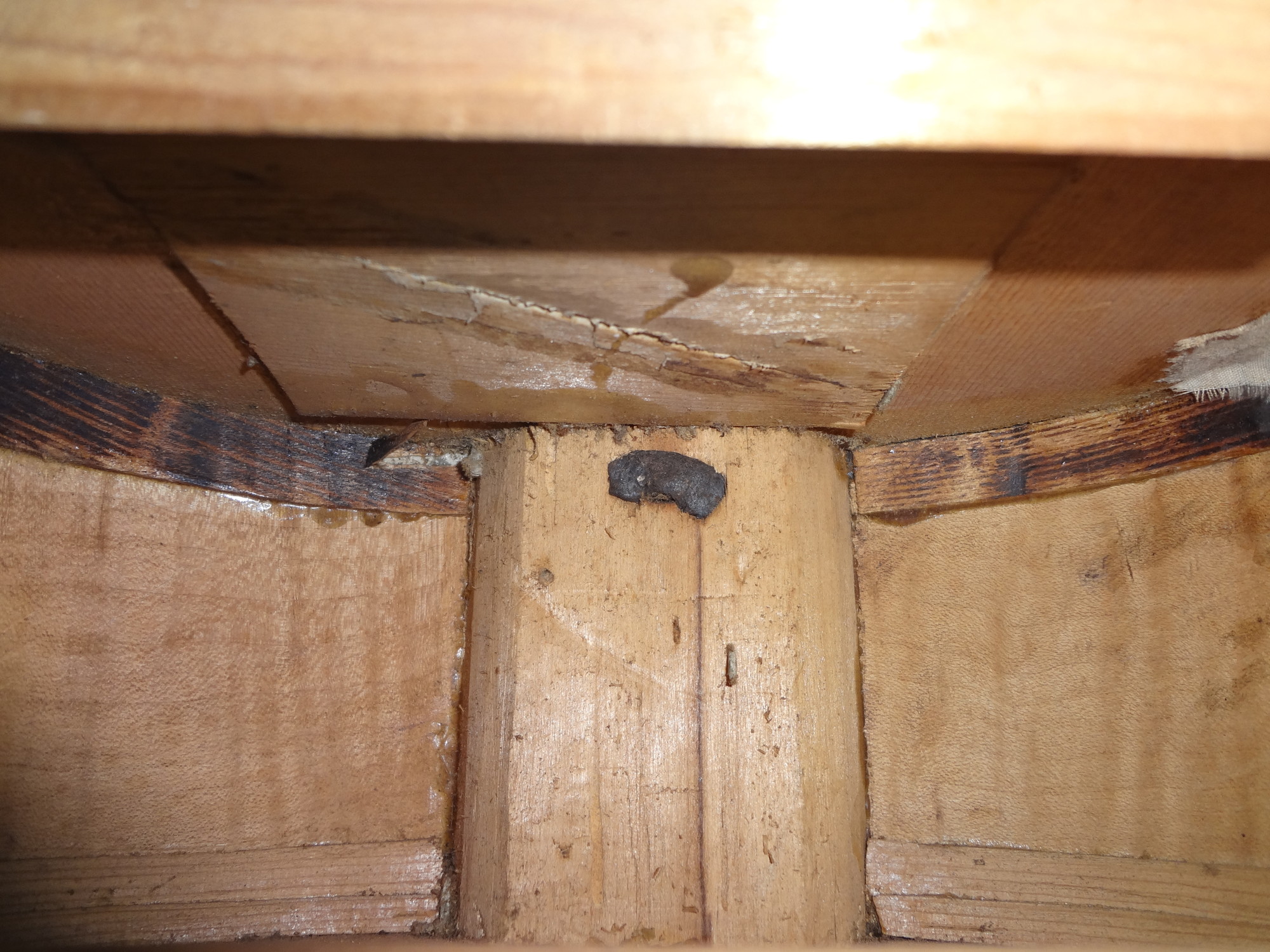
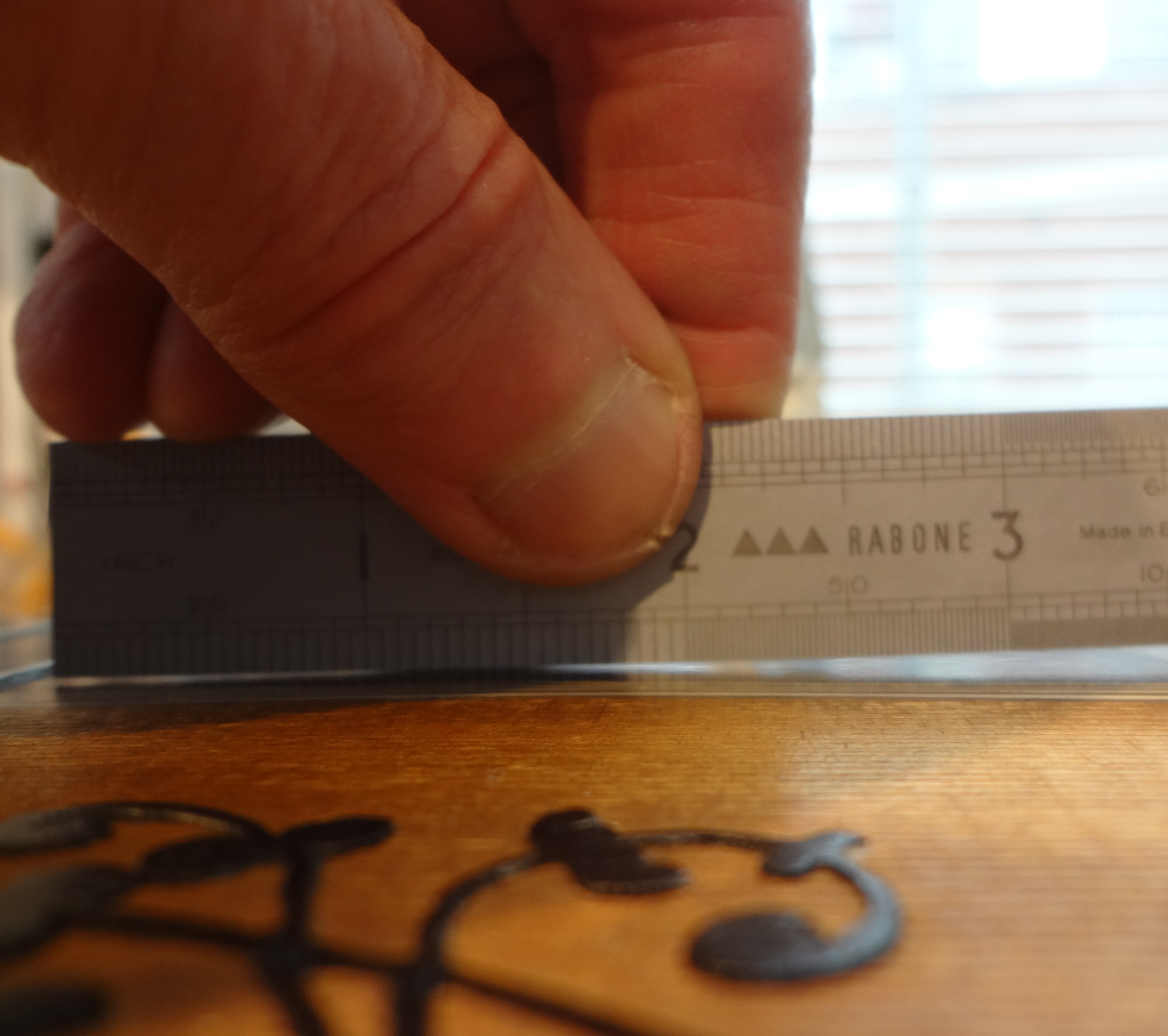
I found this beautiful old guitar is in good, clean condition but the fingerboard, which is level with the soundboard, has risen beyond the 12th fret, causing buzzing high up the fingerboard and making the guitar impossible to use. The photos above were taken in the Acadamy's workshop.
I sent the Academy an estimate for work, which has been accepted. The plan is to remove the back, replace the wood below the offending portion of the fingerboard and reassemble the guitar. Unfortunately, they are unable to get the guitar to me during the current emergency. I look forward to the work.
March 21, 2020
A Cabasse Guitar
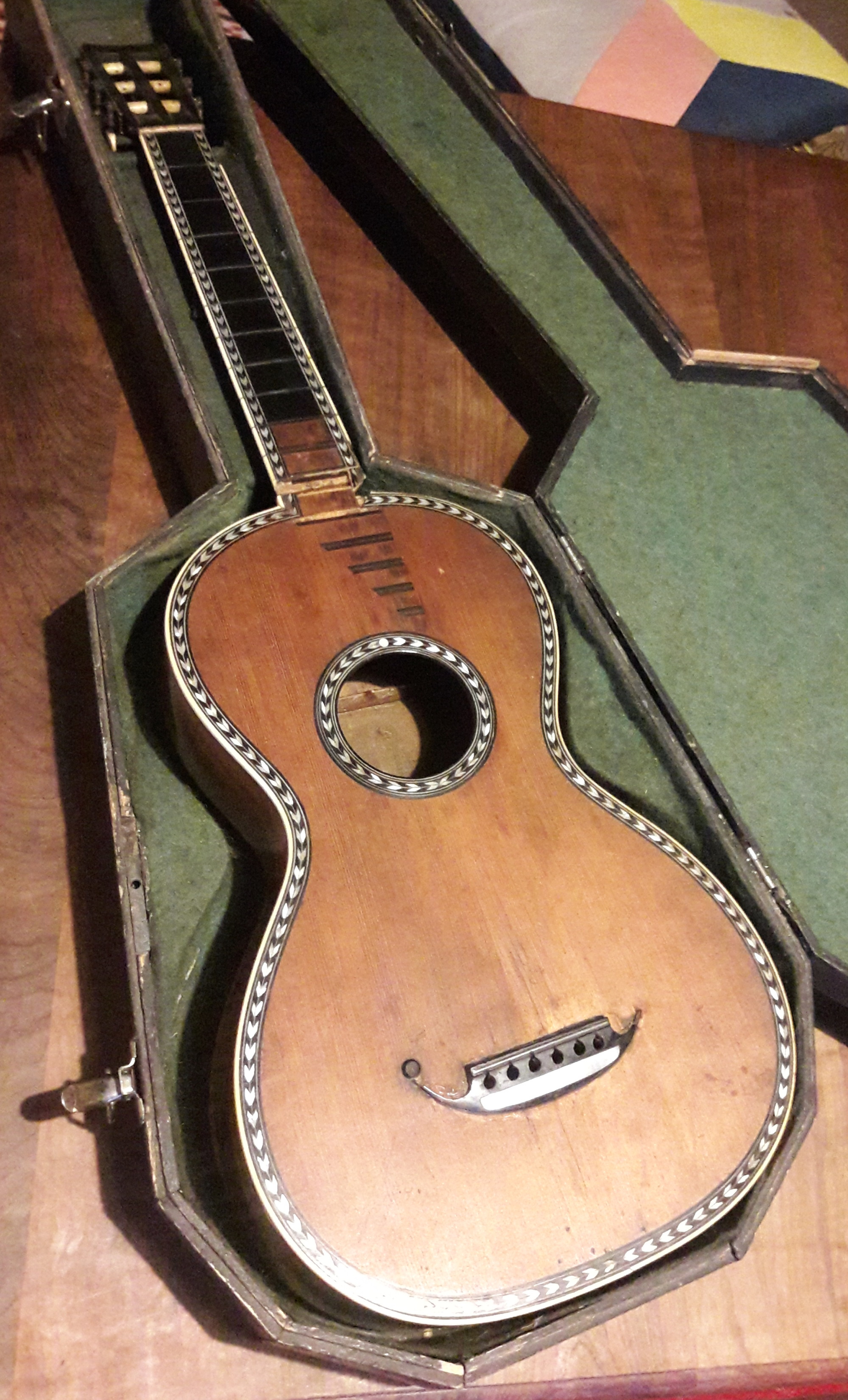
A beautiful Cabasse Guitar, early 19th century, has arrived for full restoration. It is in three pieces, neck, body, back and is in what is probably its original wooden coffin case.
The case and the guitar pieces showed signs of woodworm and everything was cleaned and treated for insect infestation.
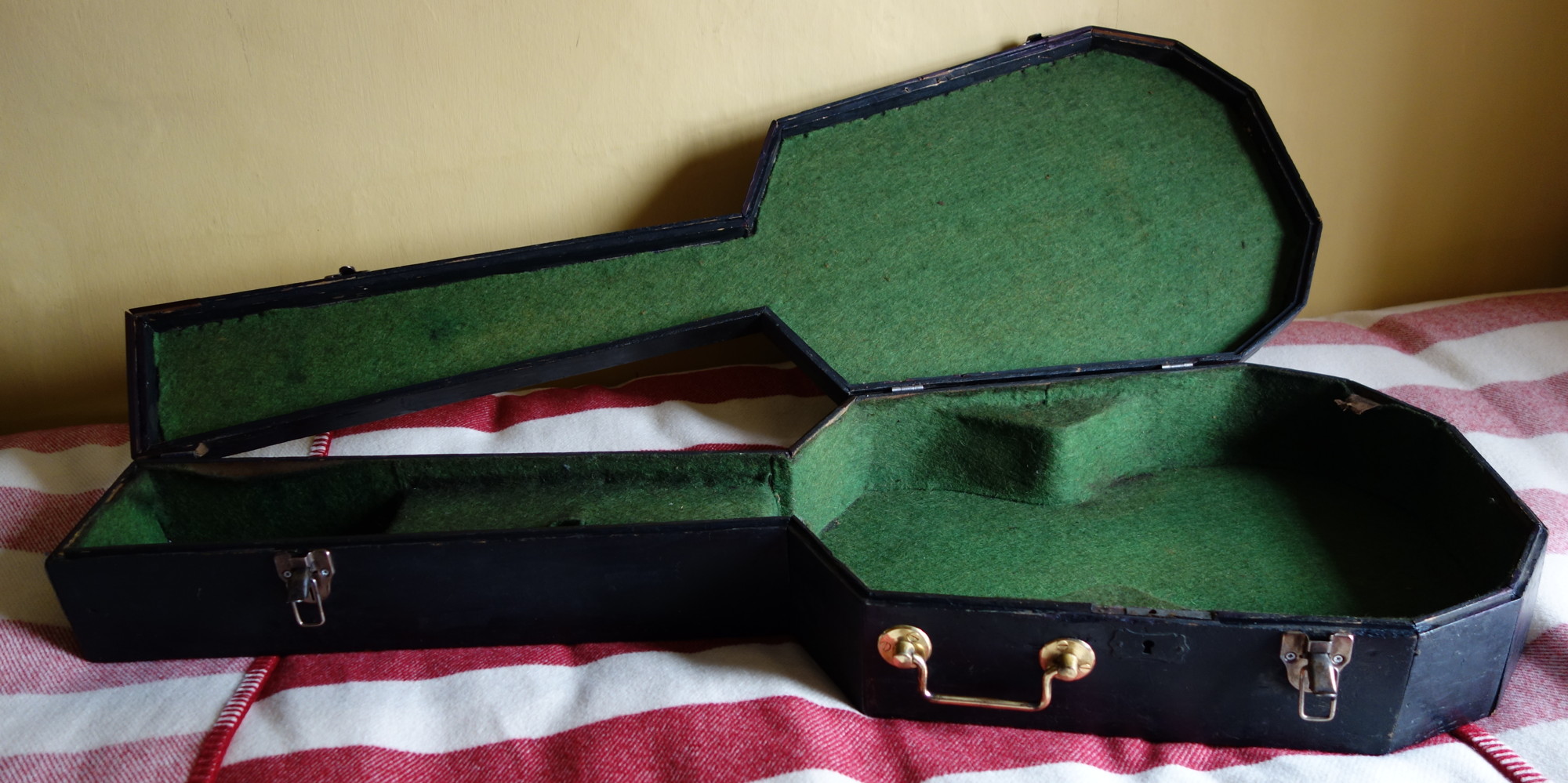
As ever, I began with the easiest work. The case had been partially repaired. I completed the repairs and added bit of black blackboard paint. Lastly I fitted an antique brass handle.
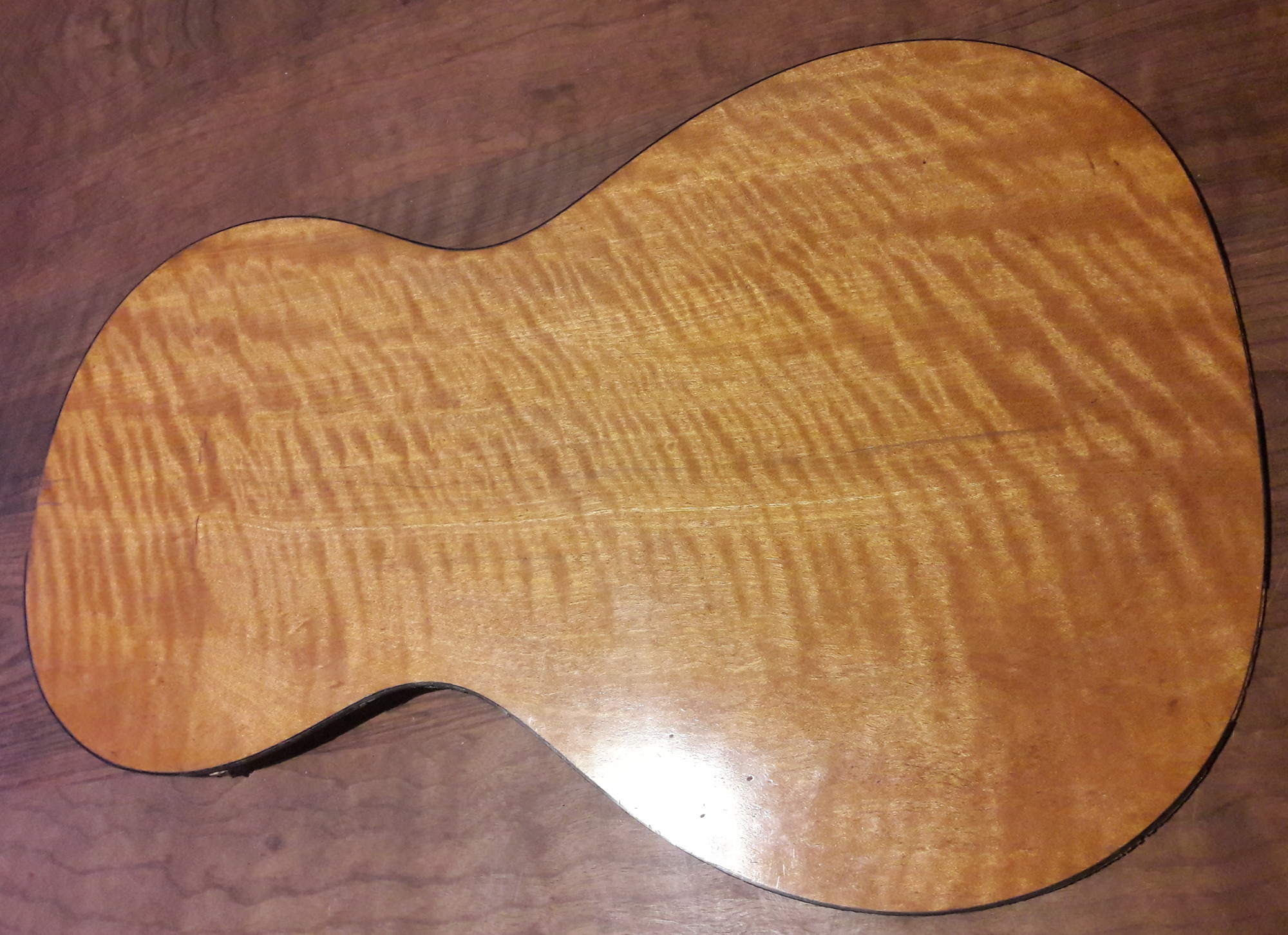


The lovely quilted maple back is next. The quilted maple is a veneer as the inside of the back is pine. One bar back bar has remained with the body and the two others are partially unglued. This is the first hint that there has been an attempt at a previous repair. When I remove backs from old guitars, often one or more bars will stay with the body, as in this case.
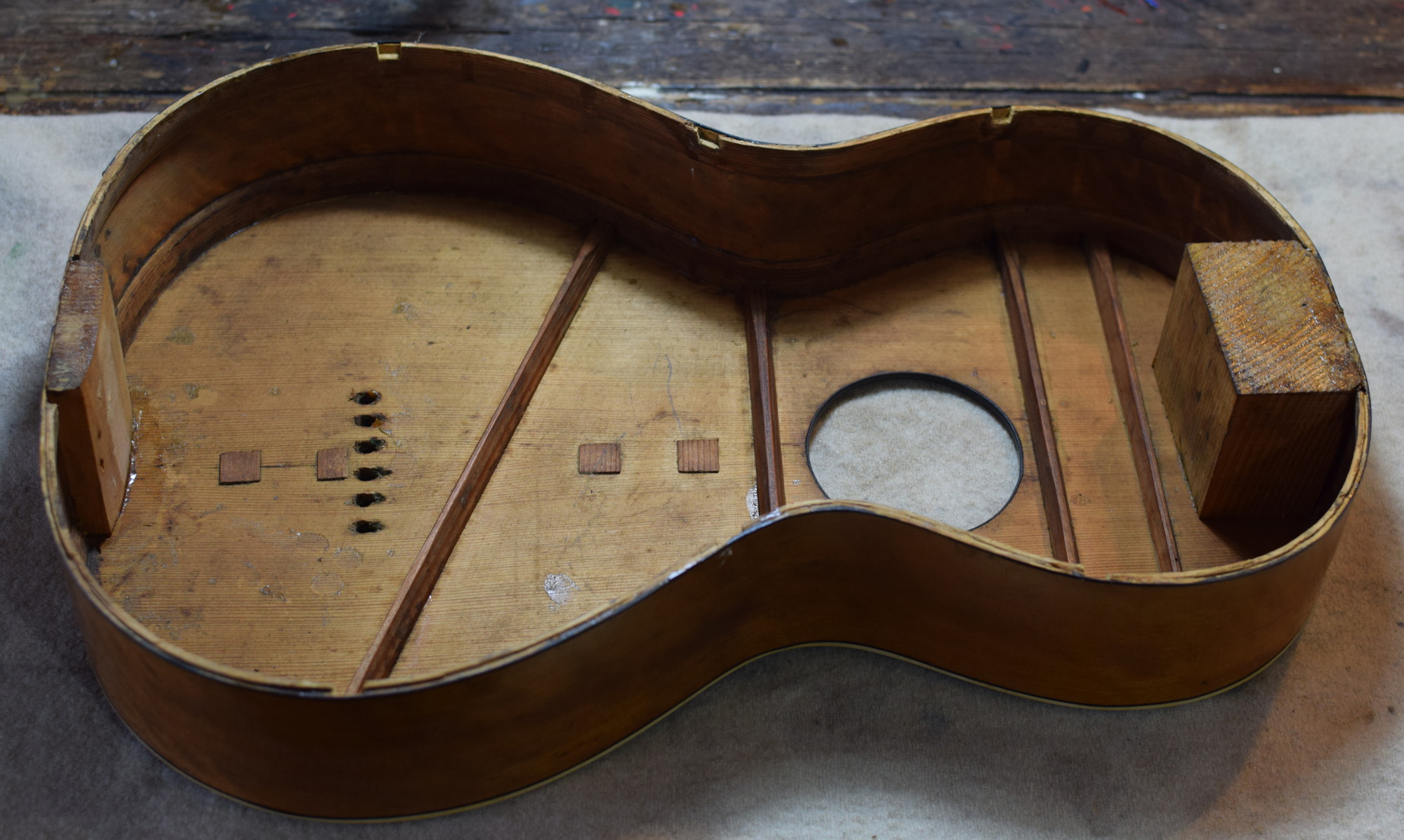
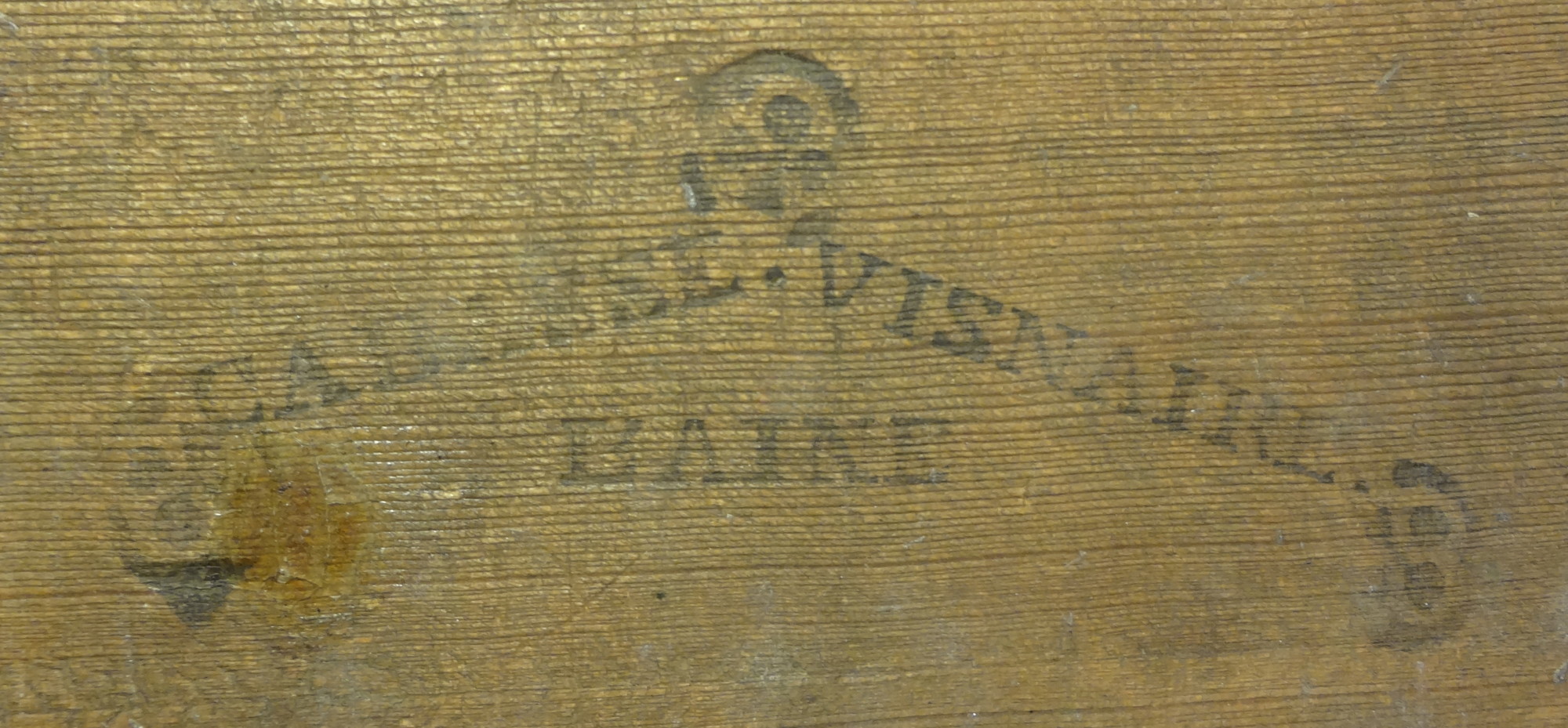
As with most old guitars made with hide glue, disassembly is possible and the back bar easily came away from the body. This is a good time to have a close look at the label. It reads "Cabasse Visnaire L'Aine". I'm not certain if this is a brand or ink. Cabasse guitars were made in Mirecourt, France.

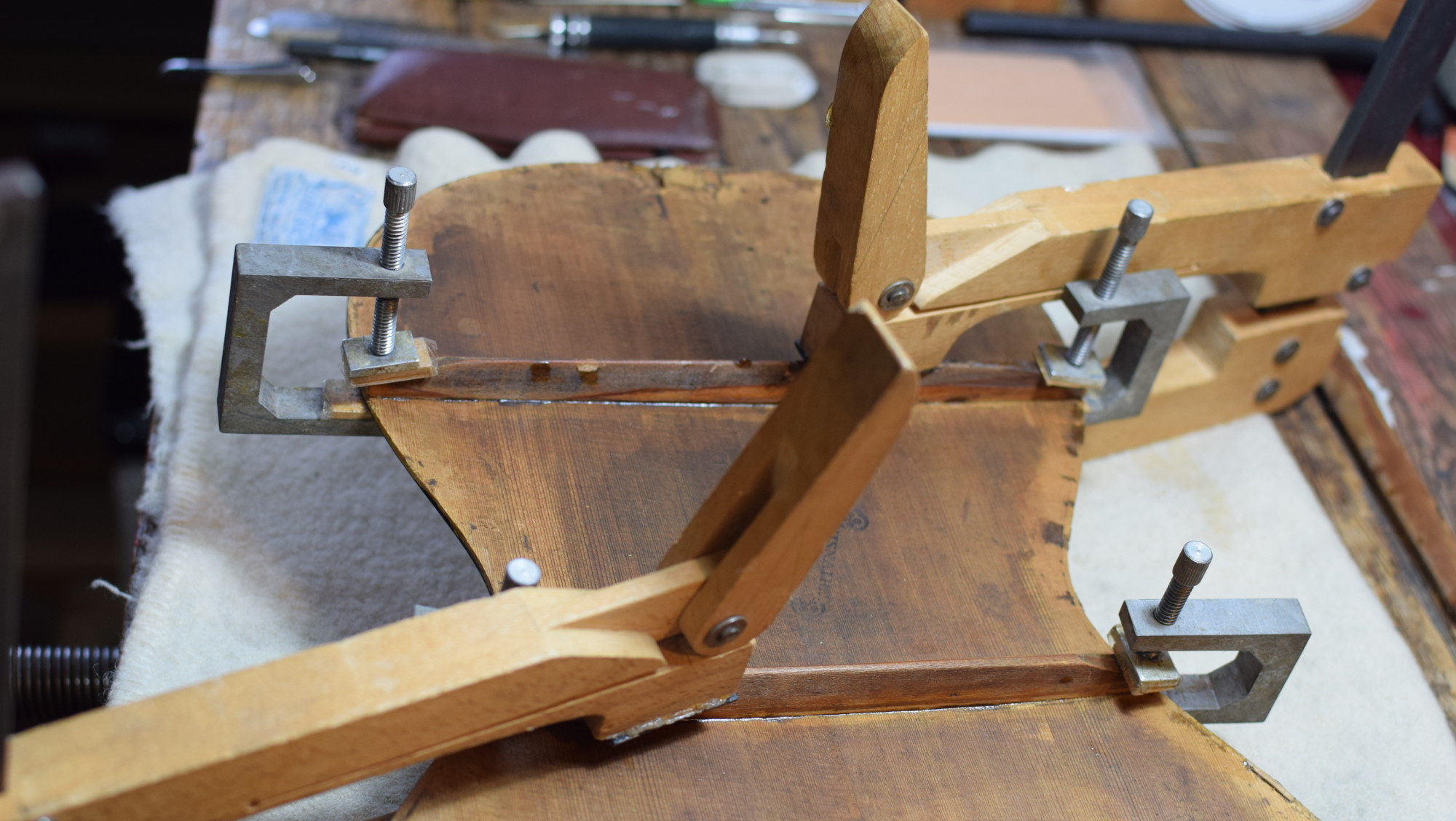
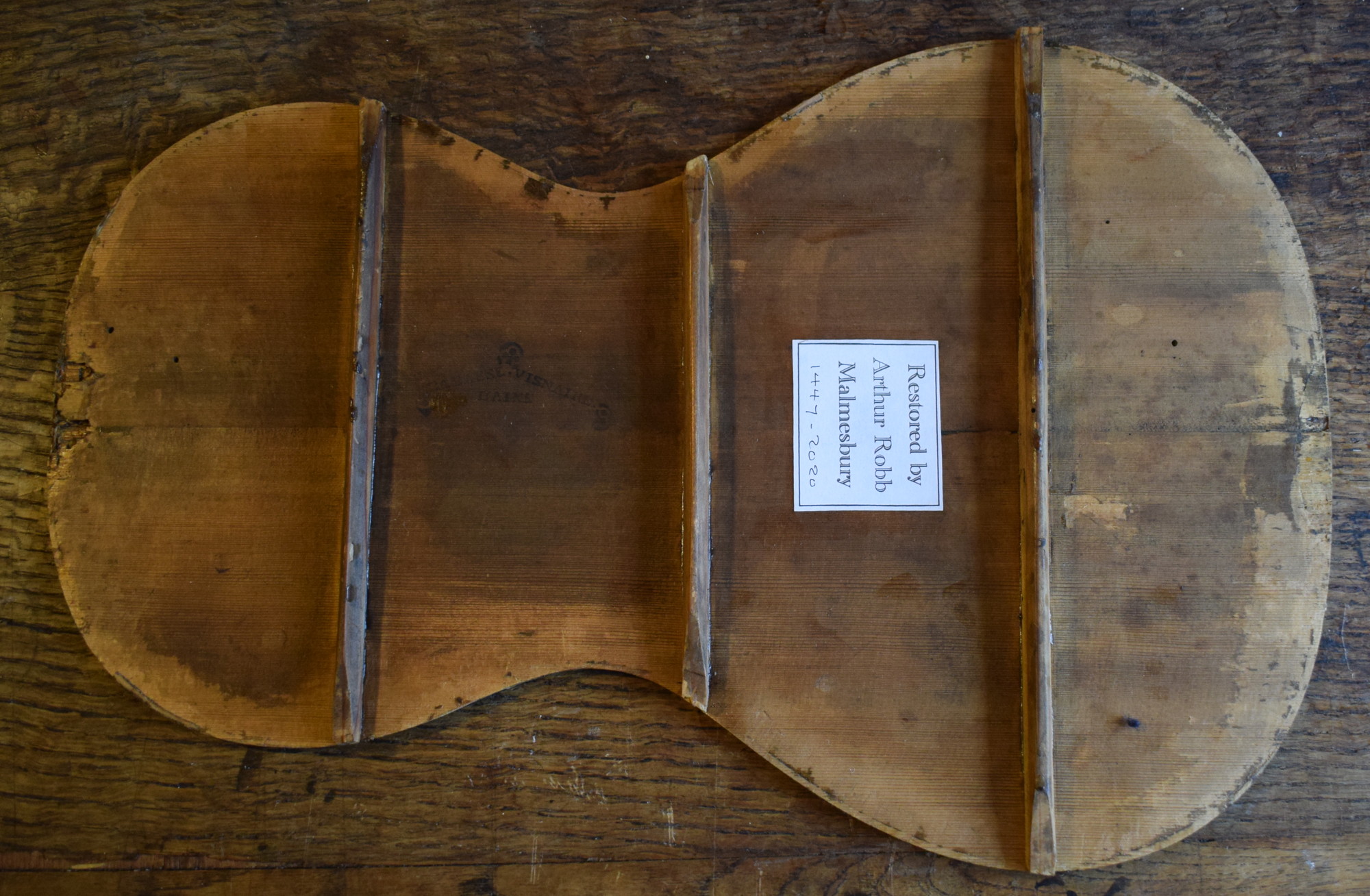
The bar that was removed from the body had damage from wood worm, but it was sturdy enough. All the back bars needed some re-gluing. When I was satisfied that the back was complete, I added my own label. One of the problems with old guitars is that the body shrinks through age, but the bars on the back, with their grain running a right angles, do not shrink as much. The bars appear to be too long, sometimes protruding through the sides of a guitar. All these bars will have to be shortened before the back can be refitted.
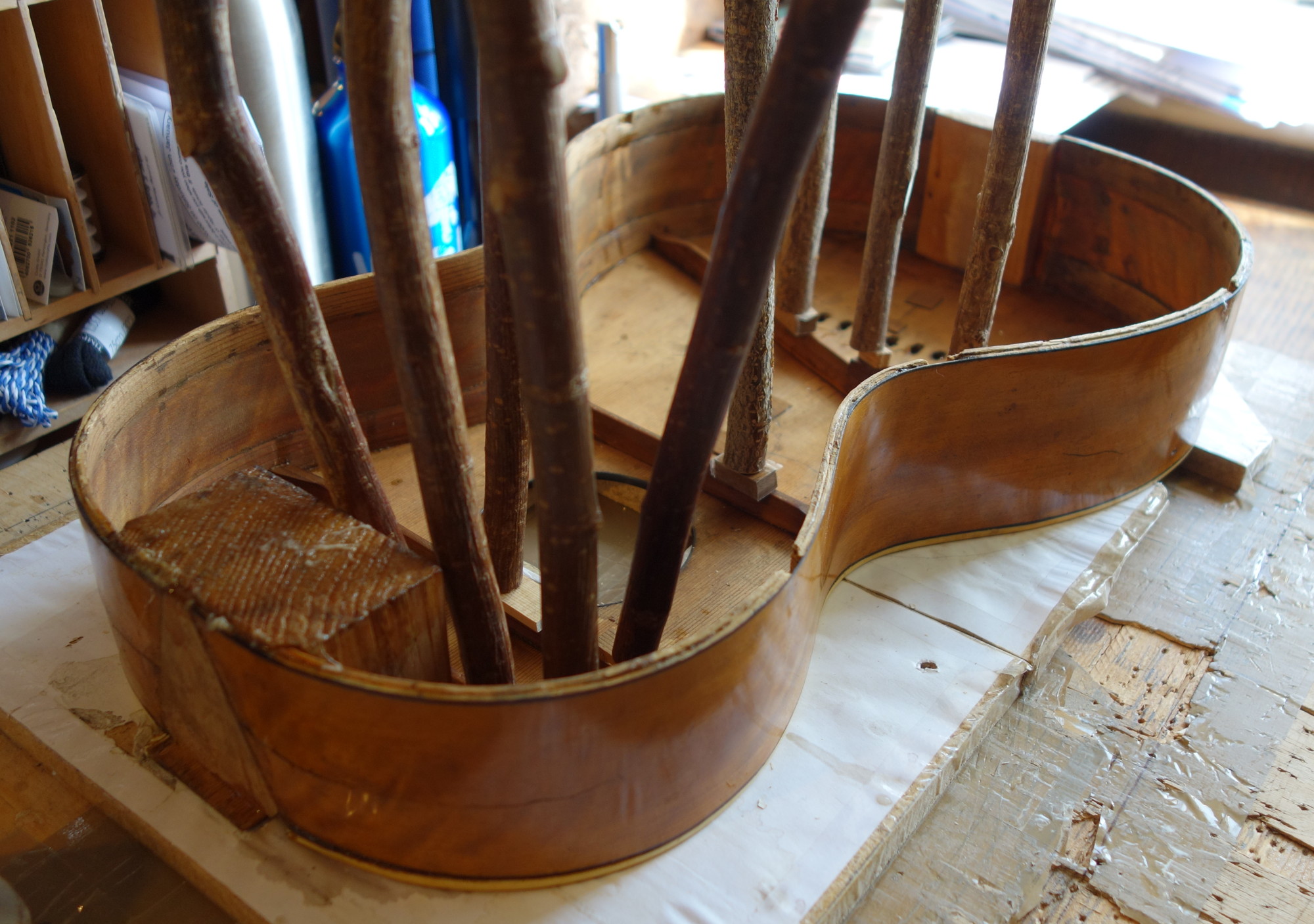

The bars under the soundboard bars were loose as well and all were reattached. I added a thin maple plate below the bridge to protect the soundboard from wear from the strings ends.
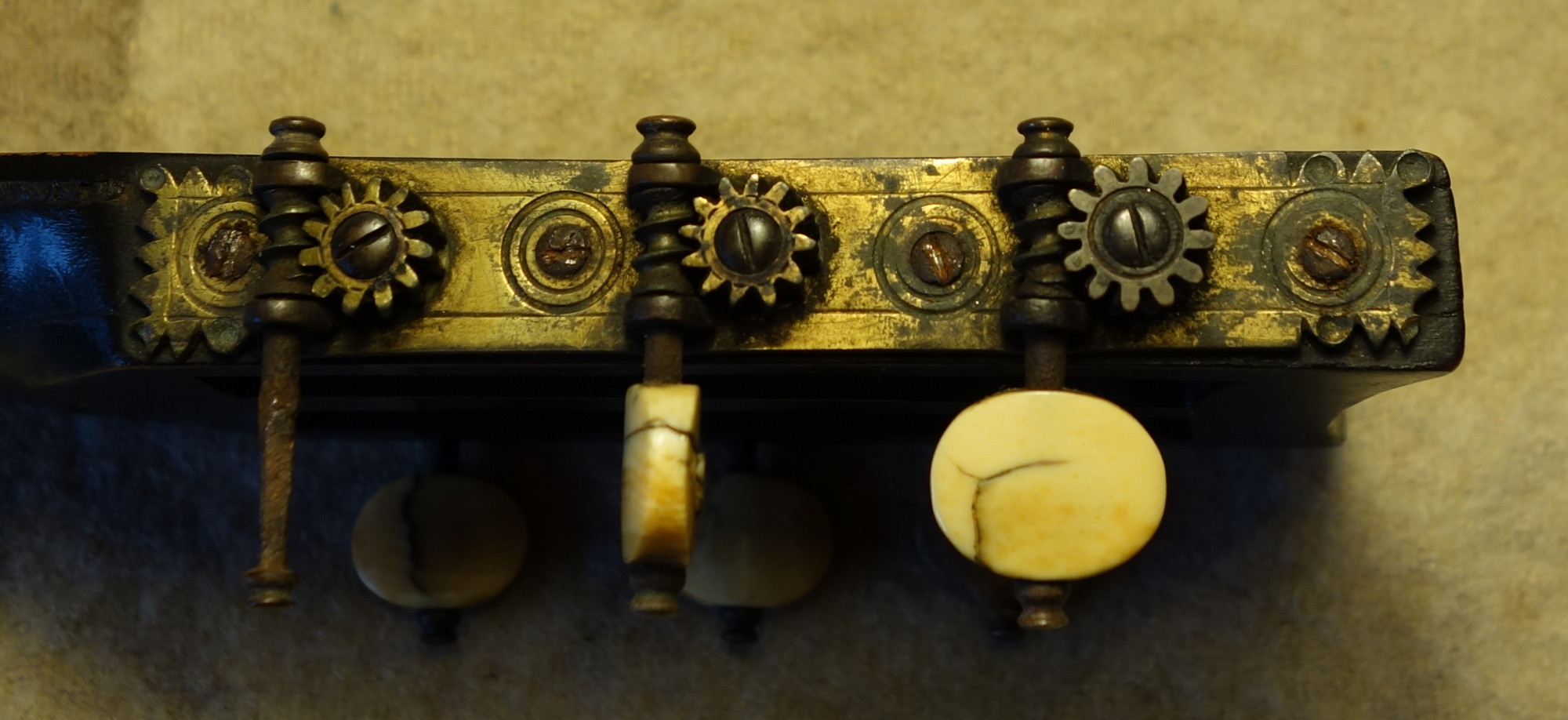
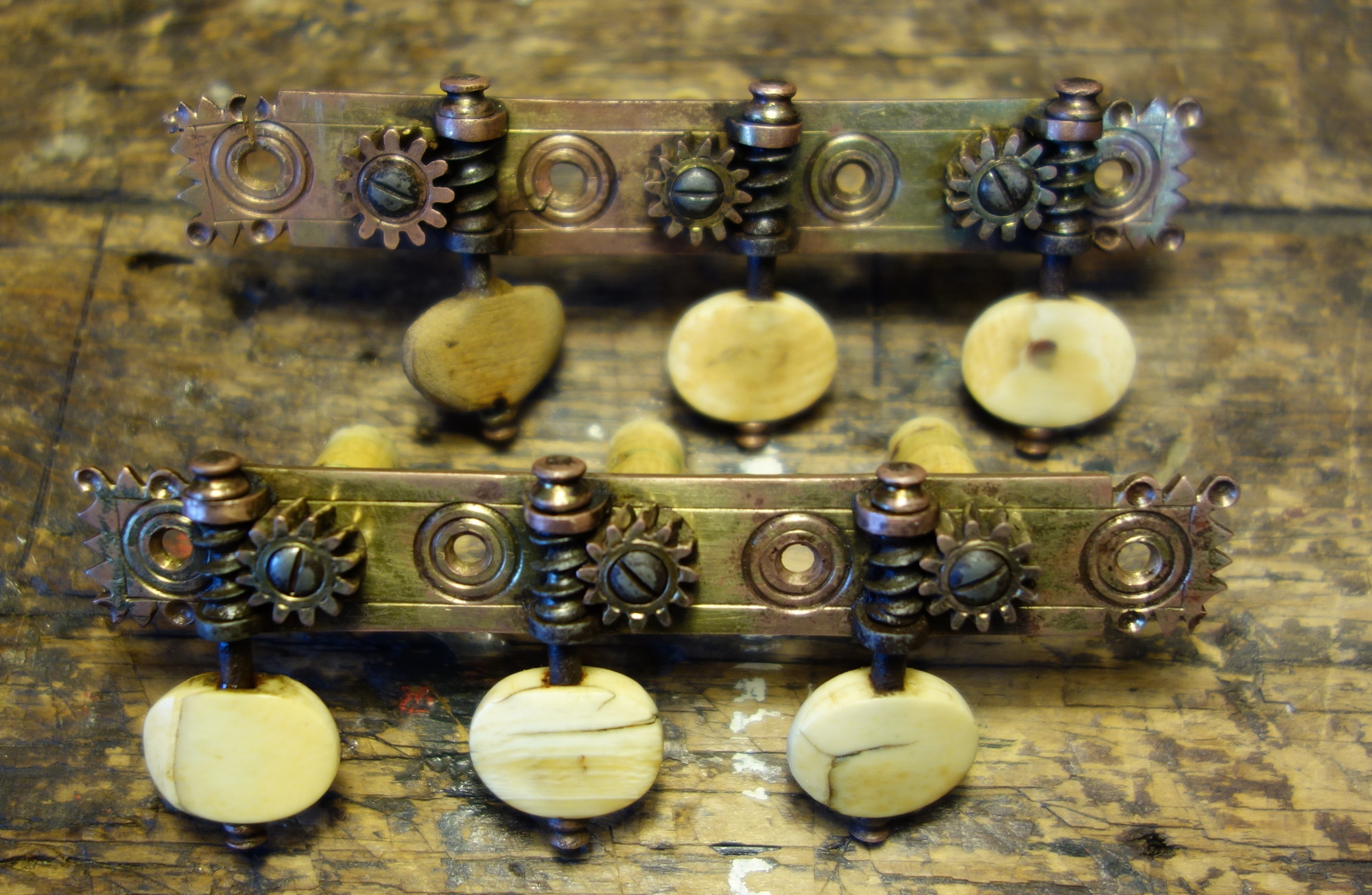
The machine heads cleaned up well and several tuning handles needed repair. These tuning machines are probably not original as most early 19th century guitars were made with friction pegs. Later, they were replaced by the more modern geared machines, such as these.
The first stage of the restoration is complete. The second stage will involve re-attaching the neck to the body and the back to the body.
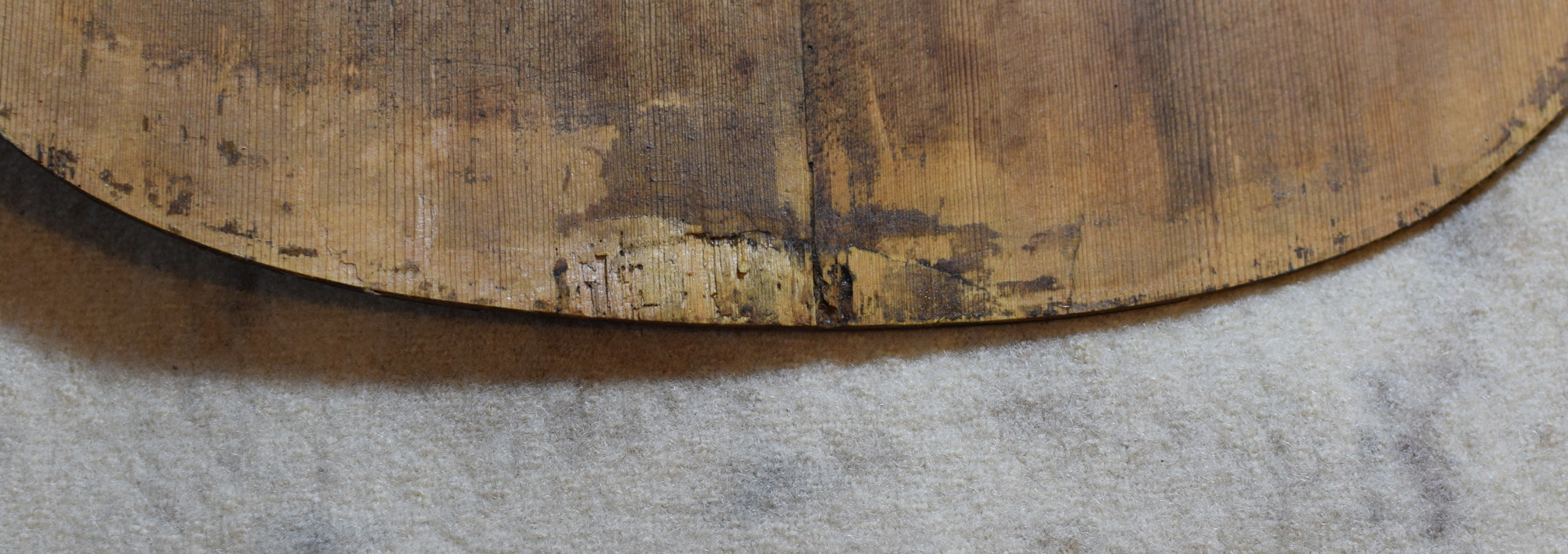
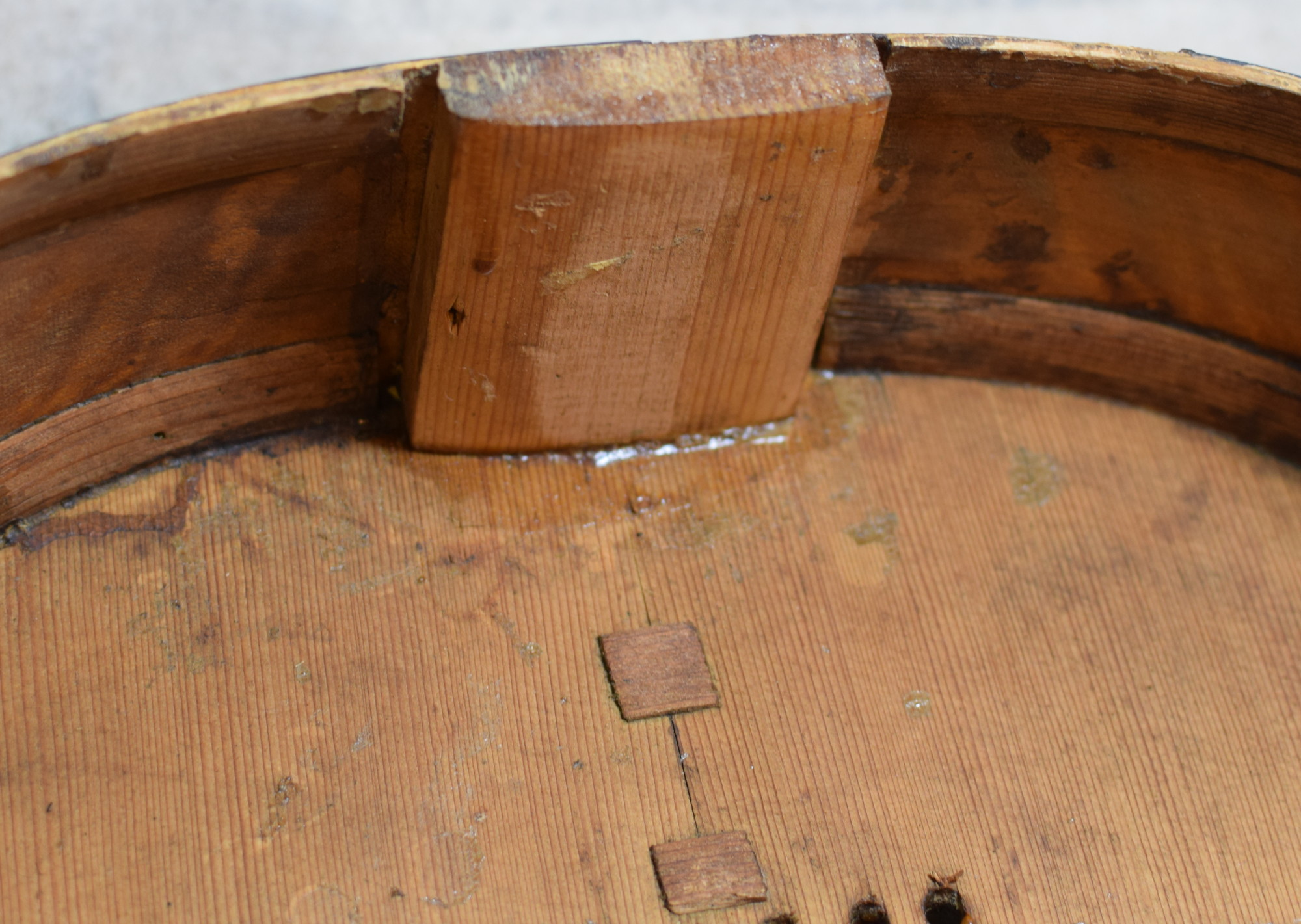
A previous repairer has fitted new front and rear blocks.The blocks are rather crude, too high, of incorrect width and glued in place by a yellowish non-reversible, non-water soluble glue. First note that the rear block is a different shape than its mark on the back.
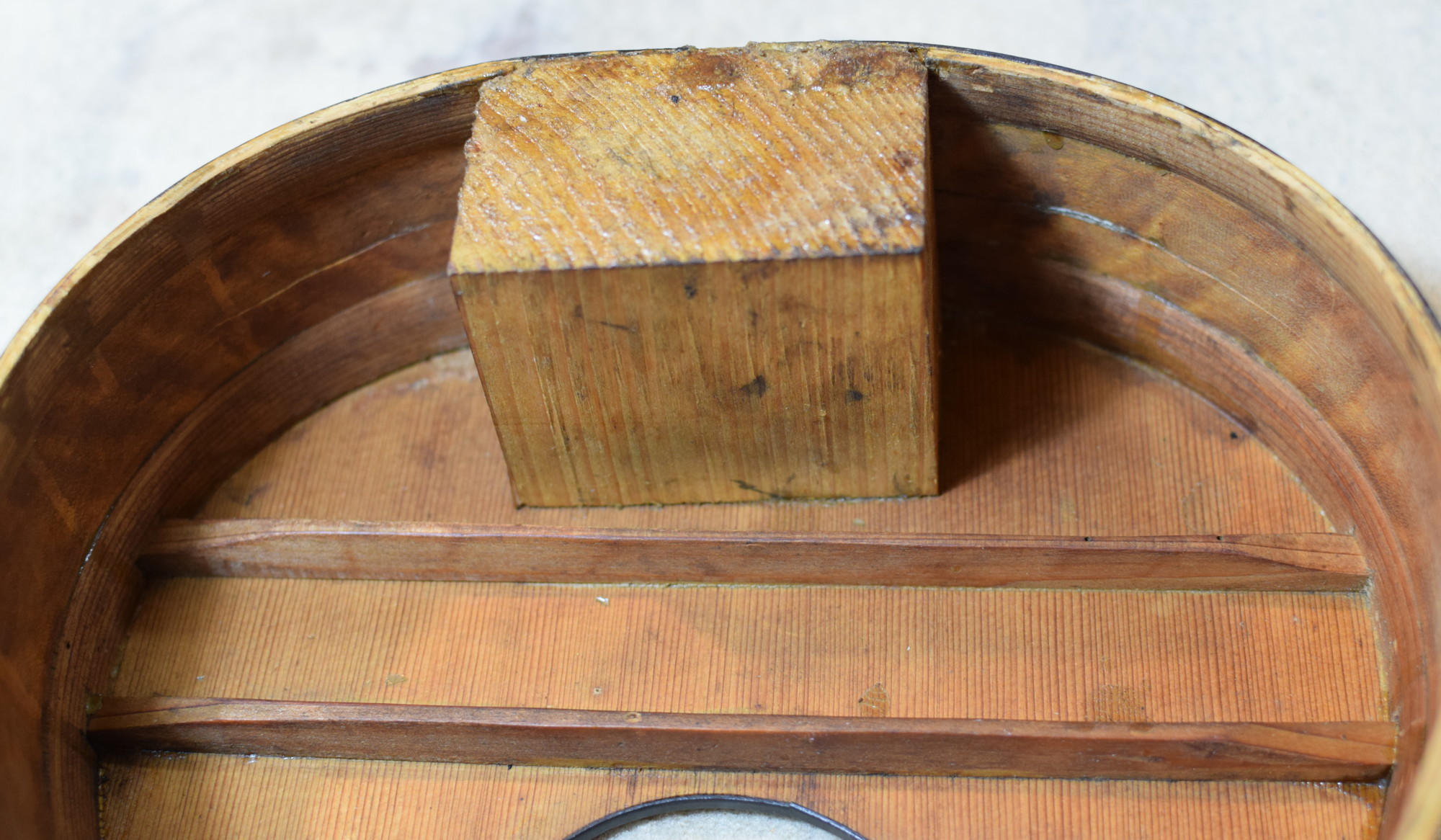
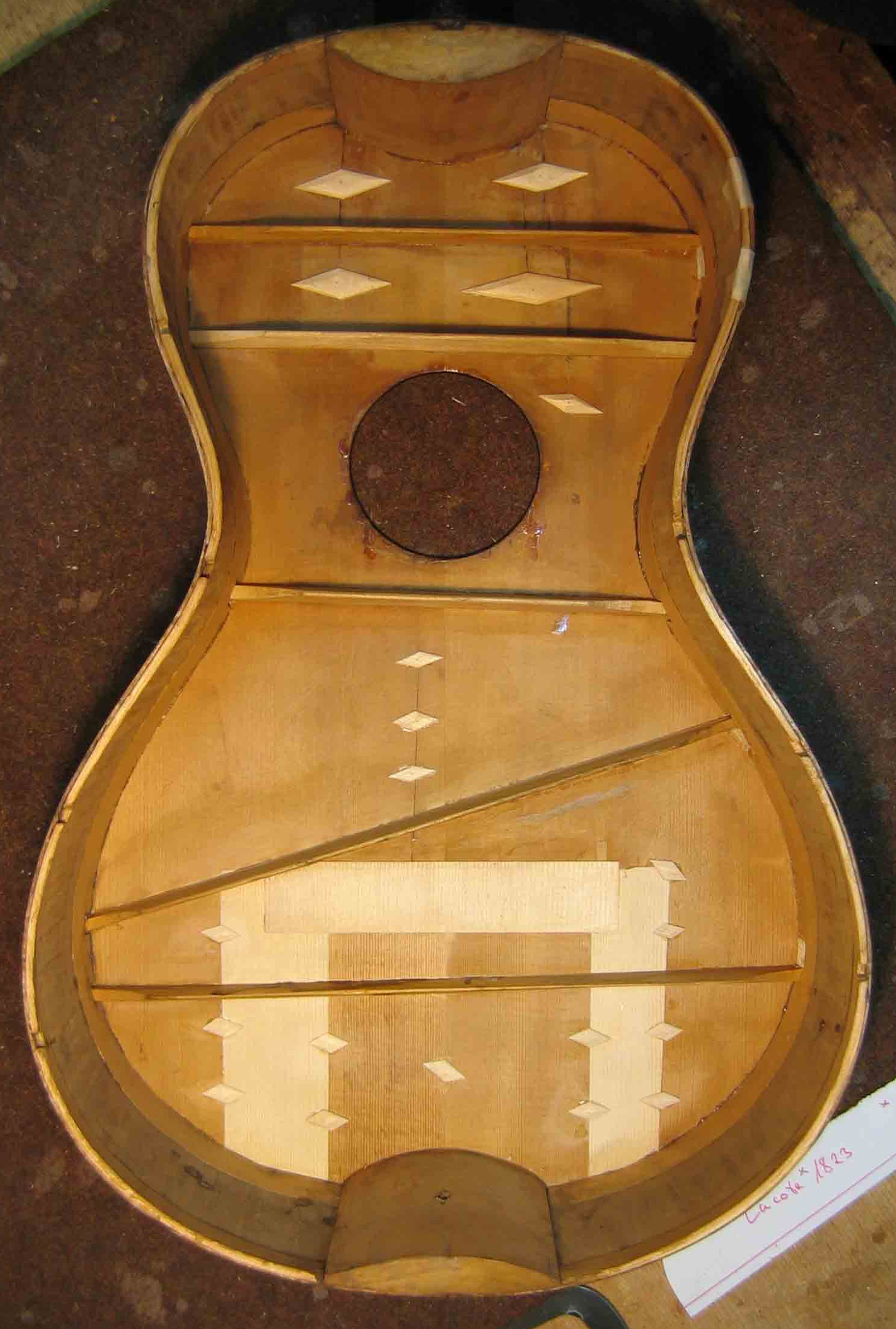
The front block is much too large, perhaps by three times. The photo on the right, from an unknown source, shows that the front and rear blocks are about the same size and that the neck and body were attached by a tapered mortice and tenon joint. I have been told by a 19th century French guitar expert that front and rear blocks are about the same size and joining the neck to the body using a butt join was common. I will attempt to reduce the size of the blocks and use a butt join to attach the neck to the body.

I found it was possible to reduce the size of the front and rear blocks by chiselling them as shown. The guitar became substantially lighter. The neck was attached to the body with a screw through the newly reduced front block. The screw acts as a clamp to hold the join together as the glue sets. The yellowish glue had been used here before and was removed.
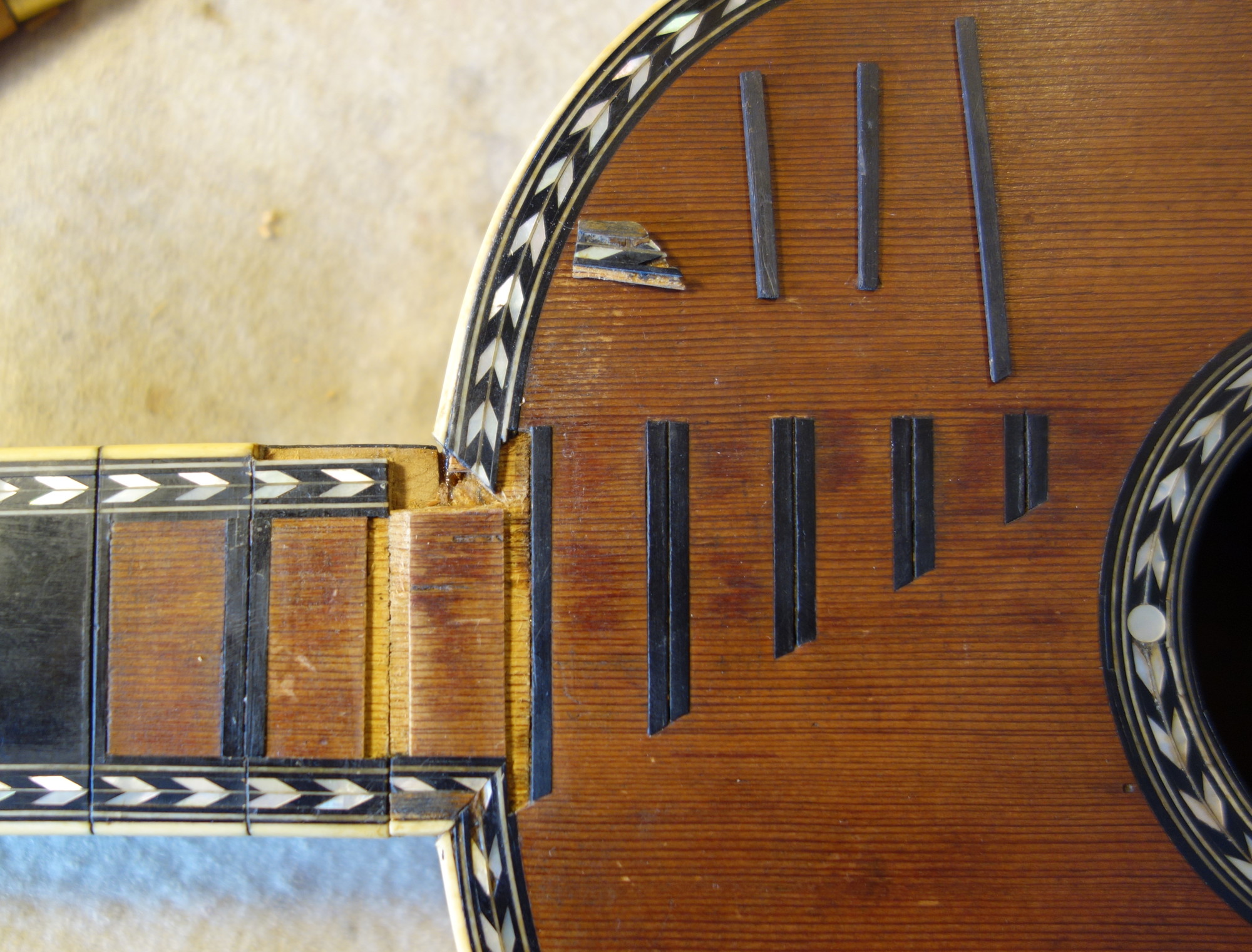
The back was added attached last leaving only decorative work. Some ivory binding remained and that was used. Where missing, I used a plastic ivory substitute, Vigoplas. Some decorative work on the soundboard at the neck join was necessary and I had to create a new MOP and ebony eye for the bridge
Once fretted the guitar played very well indeed. It is strung with Aquila Nylgut strings and is ready to be returned to its owners.
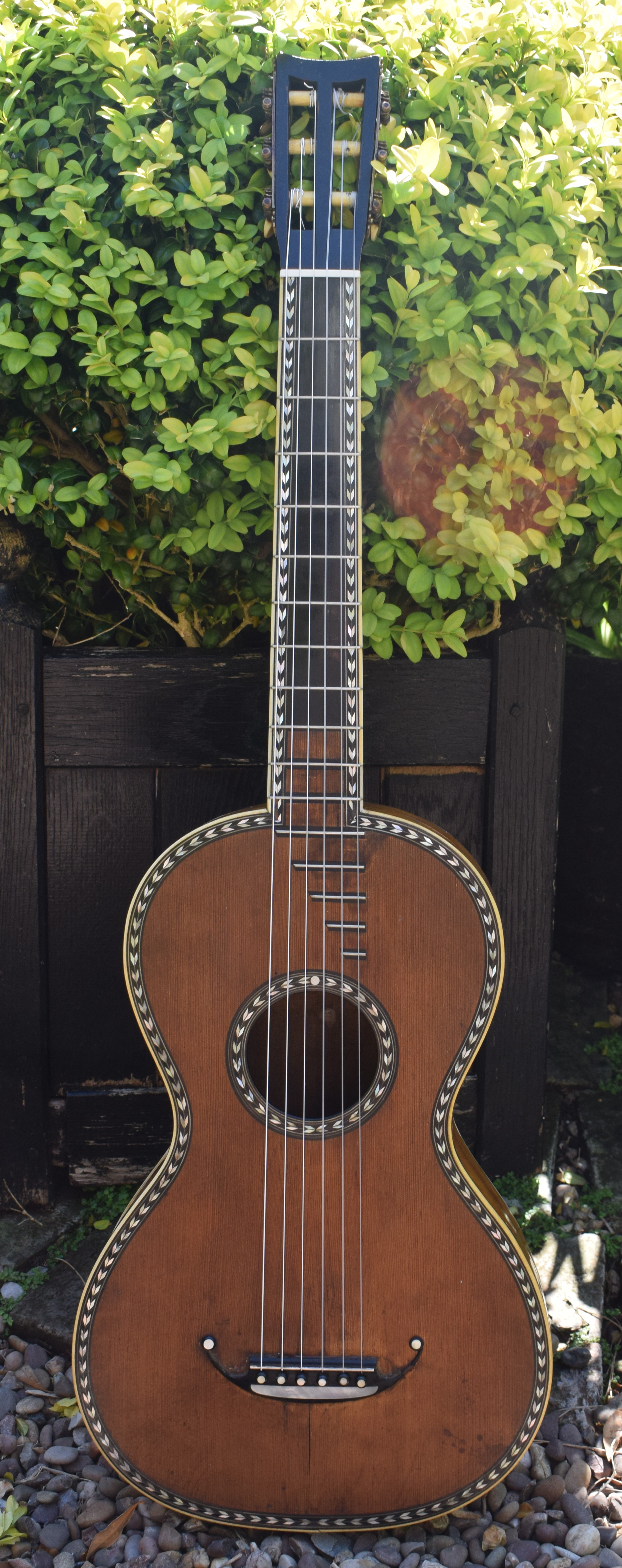
Dimensions:
String length: 644mm
Overall Length: 890mm
Width of upper bout: 227mms
Width at waist: 168mm
Width at lower bout: 290mm
Height at upper bout:70mm
Height at lower bout: 80mm
Nut width: 47mm
Distance between 12 fret and 1st string; 4.2mm
Distance between 12 fret and 6th string; 4.3mm
Weight: 0.975kg
June 2020
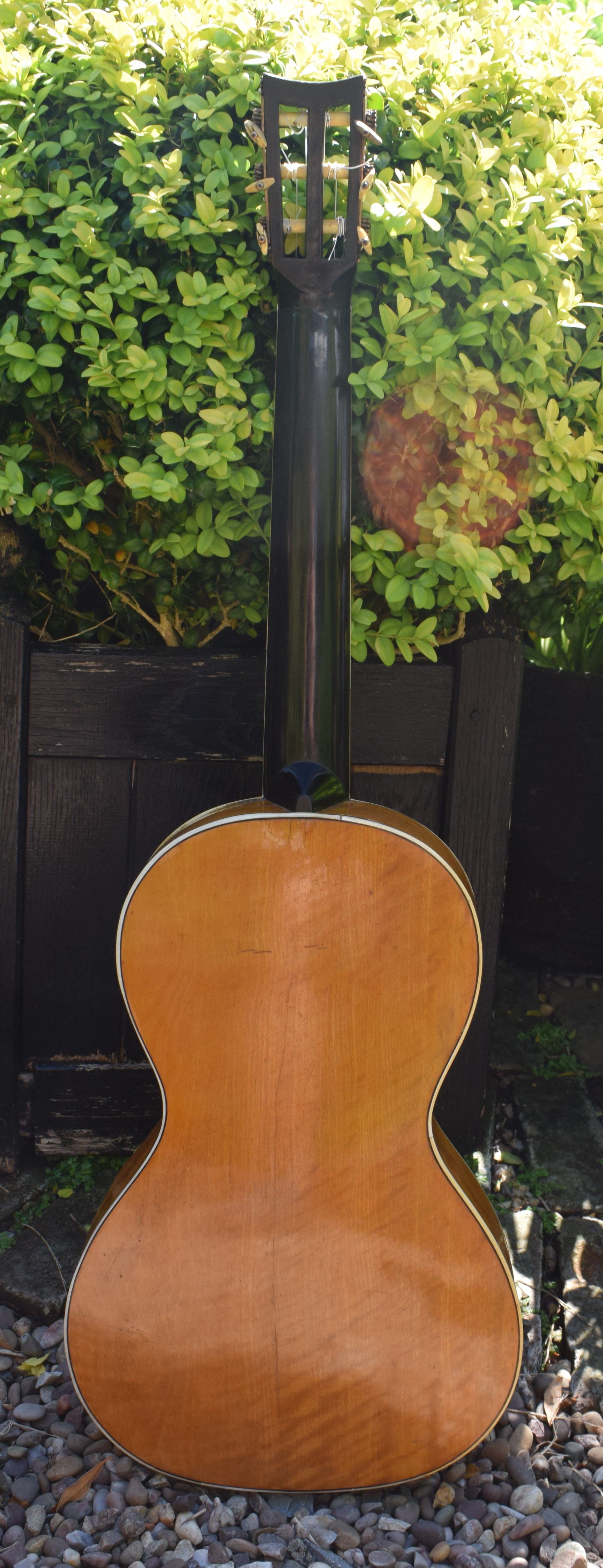
An Ashborn Guitar
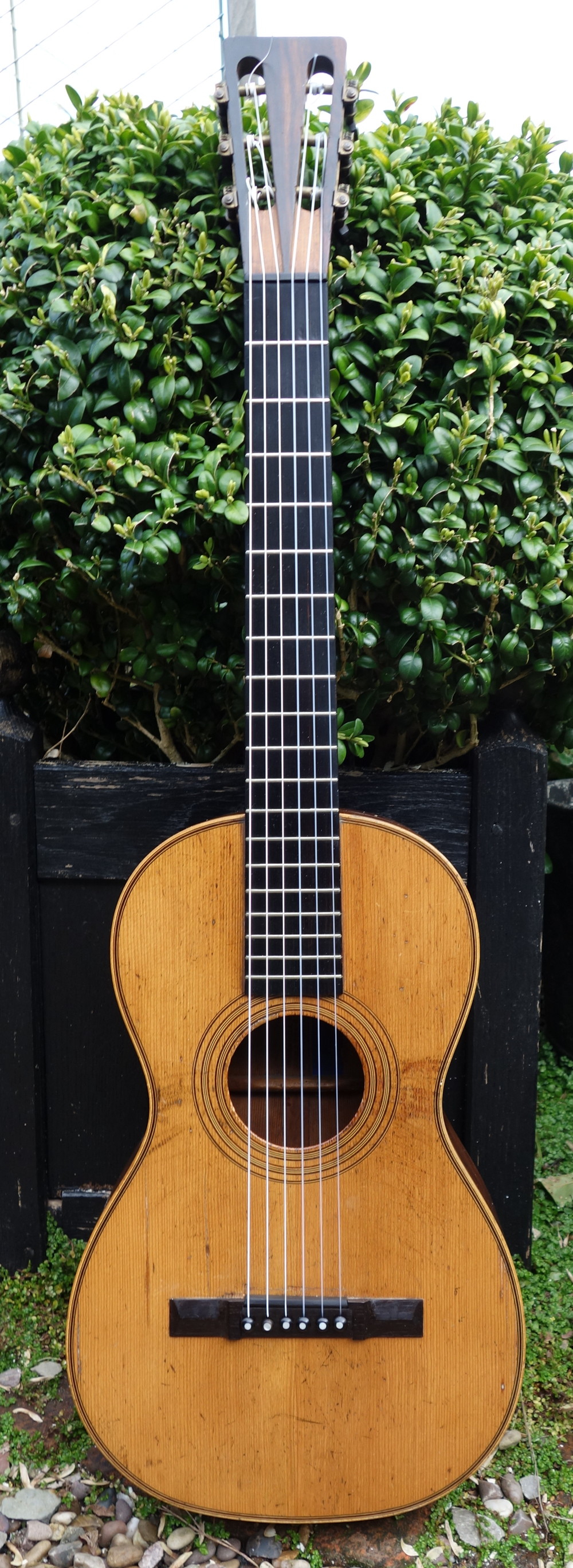
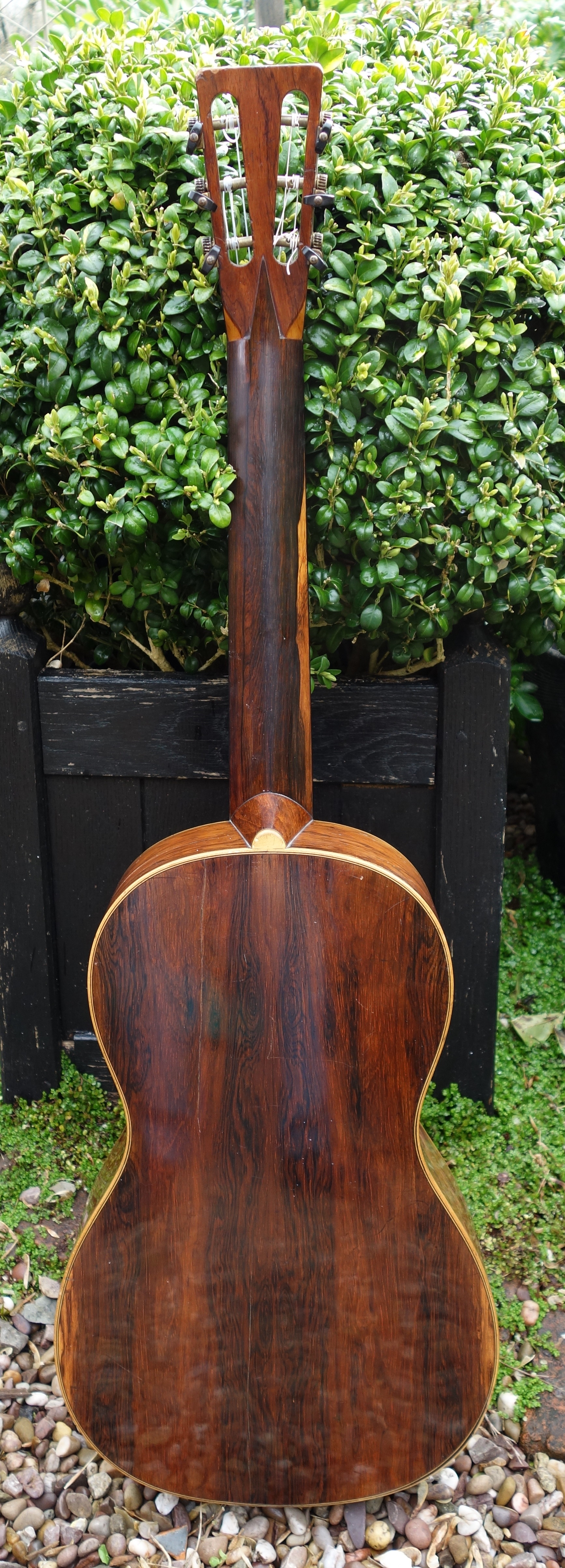
A James Ashborn guitar, style 4, made in the early 1850's, is, in 2020, in the workshop for repairs.
James Ashborn guitars were made Connecticut, USA. The Ashborn factory was mechanised and powered by water wheels with belts and pulleys to operate the machines, possibly the first factory of its kind. Guitars were made in six styles, were not dated and the output prodigious. They were built in the Spanish style. This fine example of an Ashbourne has come to the UK from the USA.
The guitar is in beautiful condition and there was no justification for removing the back. This meant all internal repairs would be done through the sound hole.

When the guitar arrived it rattled a great deal. All of the bars attached to the back had come loose as can be seen in the photo on the left. Hot hide glue was applied to the loose bar and it was pushed into place by a piece of wood exactly the correct length, floor to ceiling. Then a clamp held the whole under pressure. There were four bars, each loose at both ends. The bars deep inside the guitar were particularly difficult.
It is interesting to note that the back and sides of the guitar have been veneered.
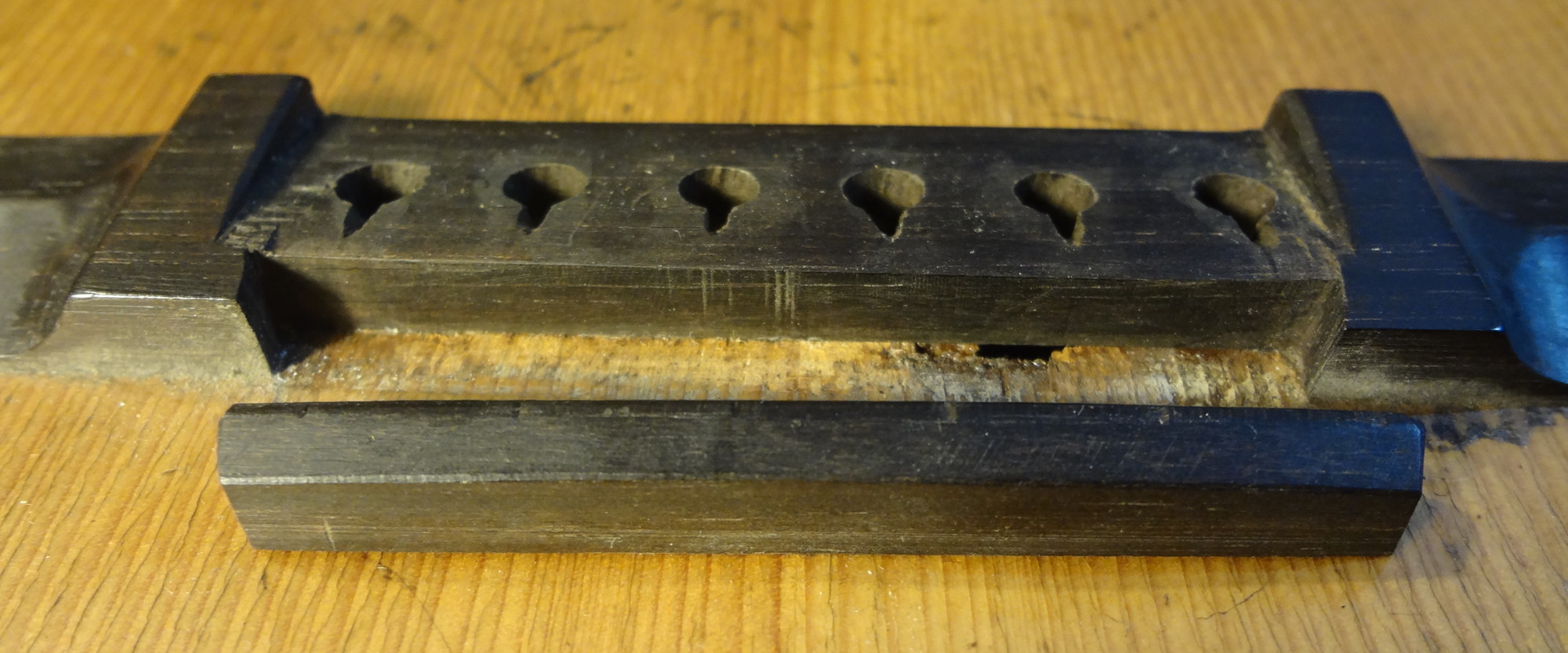
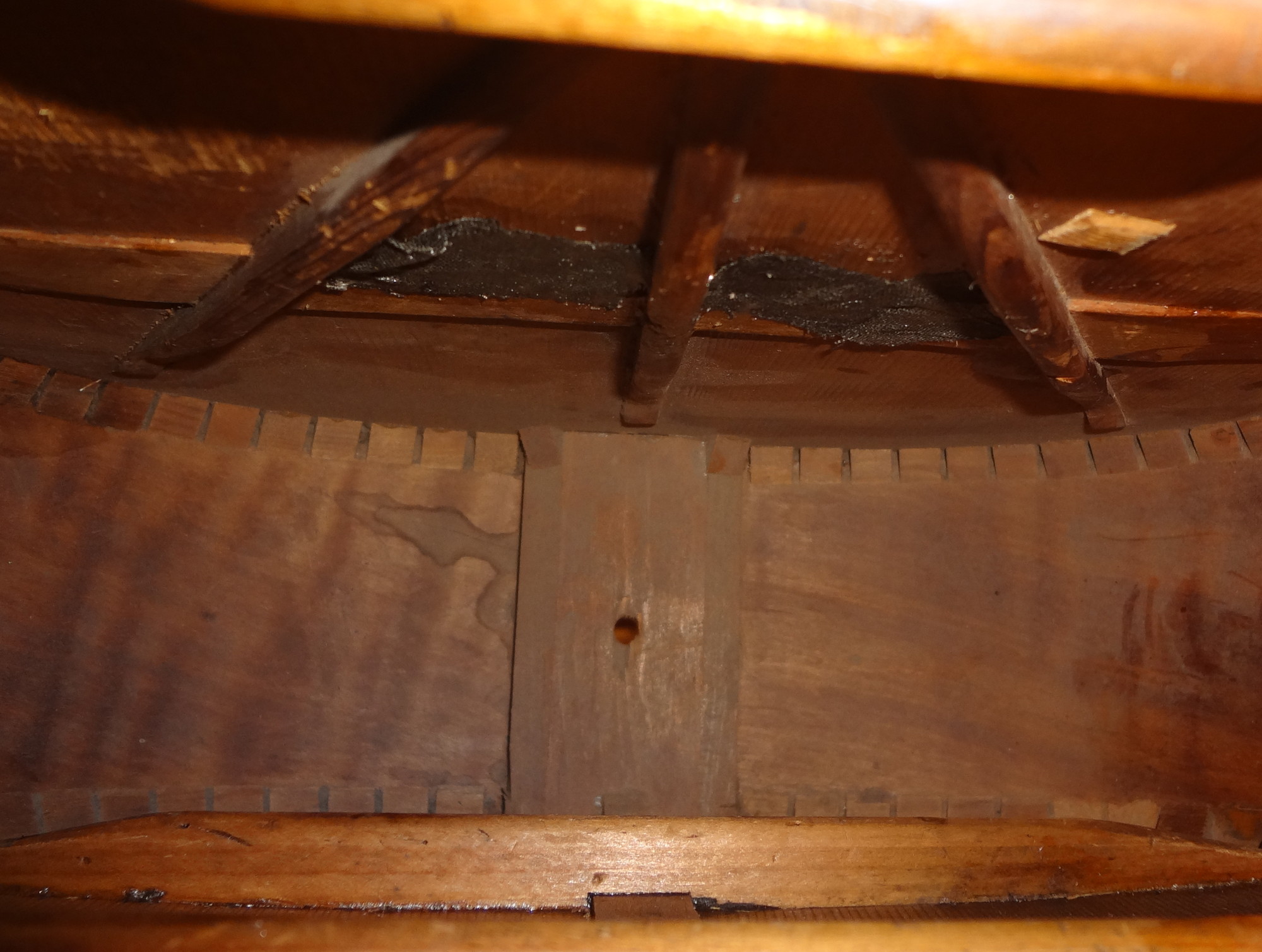
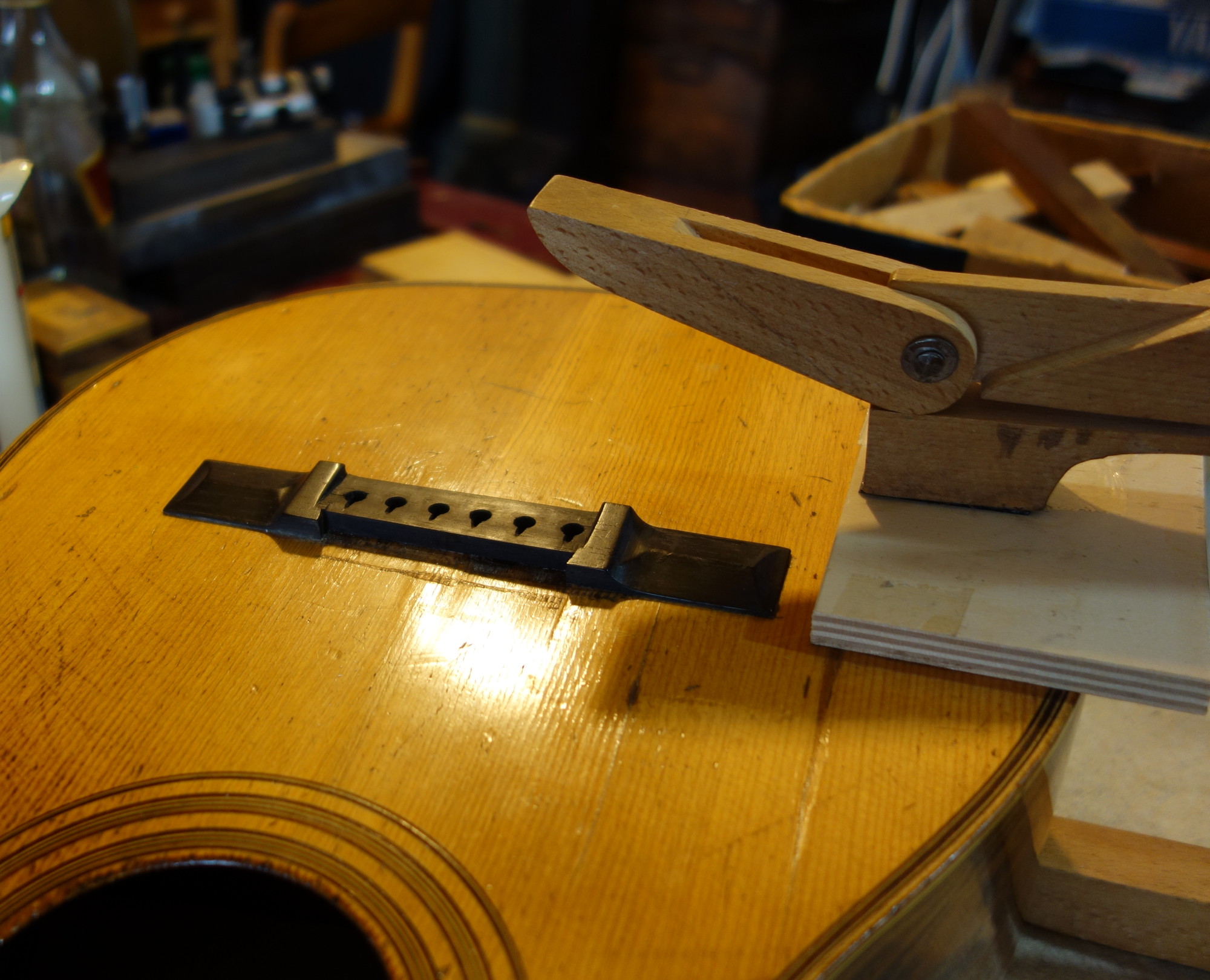
It appeared that the bridge was coming loose from the soundboard, but that was not the case. The unusual removable ebony saddle hid a hole. Previous repairs in this area had been done with a glue that was not water soluble. A plate had been glued below the bridge to protect the soundboard from the end of the guitar string. This had partly perished but could not be removed. To protect the area from further damage, I glued linen strips under the bridge, positioning them in hot hide glue by hand. It is not the prettiest solution but it will do the job and is removable.
In this area, the soundboard was not flat. It is the undulations of the soundboard that made the bridge look as though it was coming off. Again, the repairs had been done with a permanent glue and modification was impossible. The area was strong enough if unsightly. A new ebony saddle was needed to better fit the contours of the soundboard.
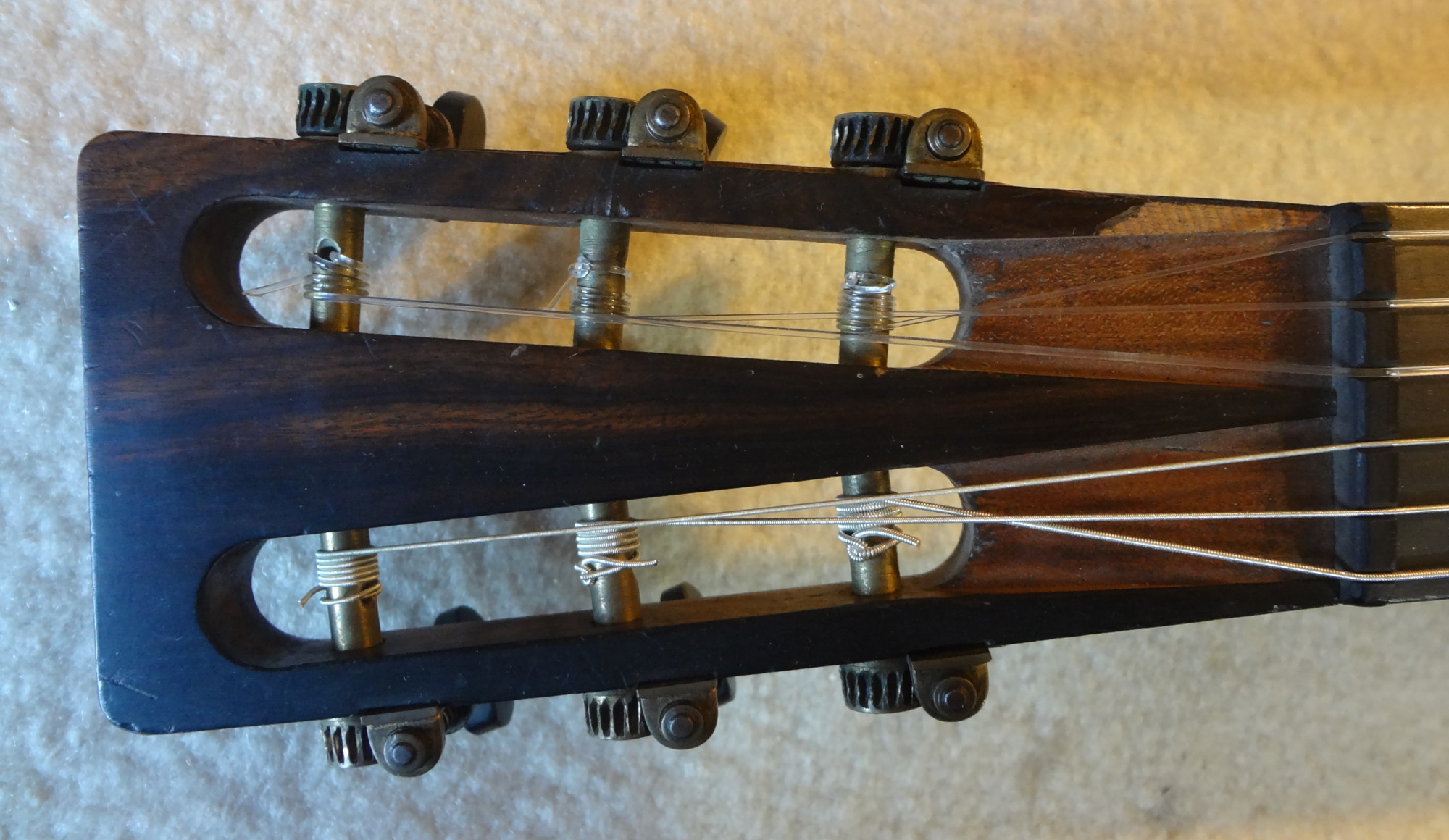
A small piece of the wonderful rosewood veneer was missing on the head. I found some wood which matched well.

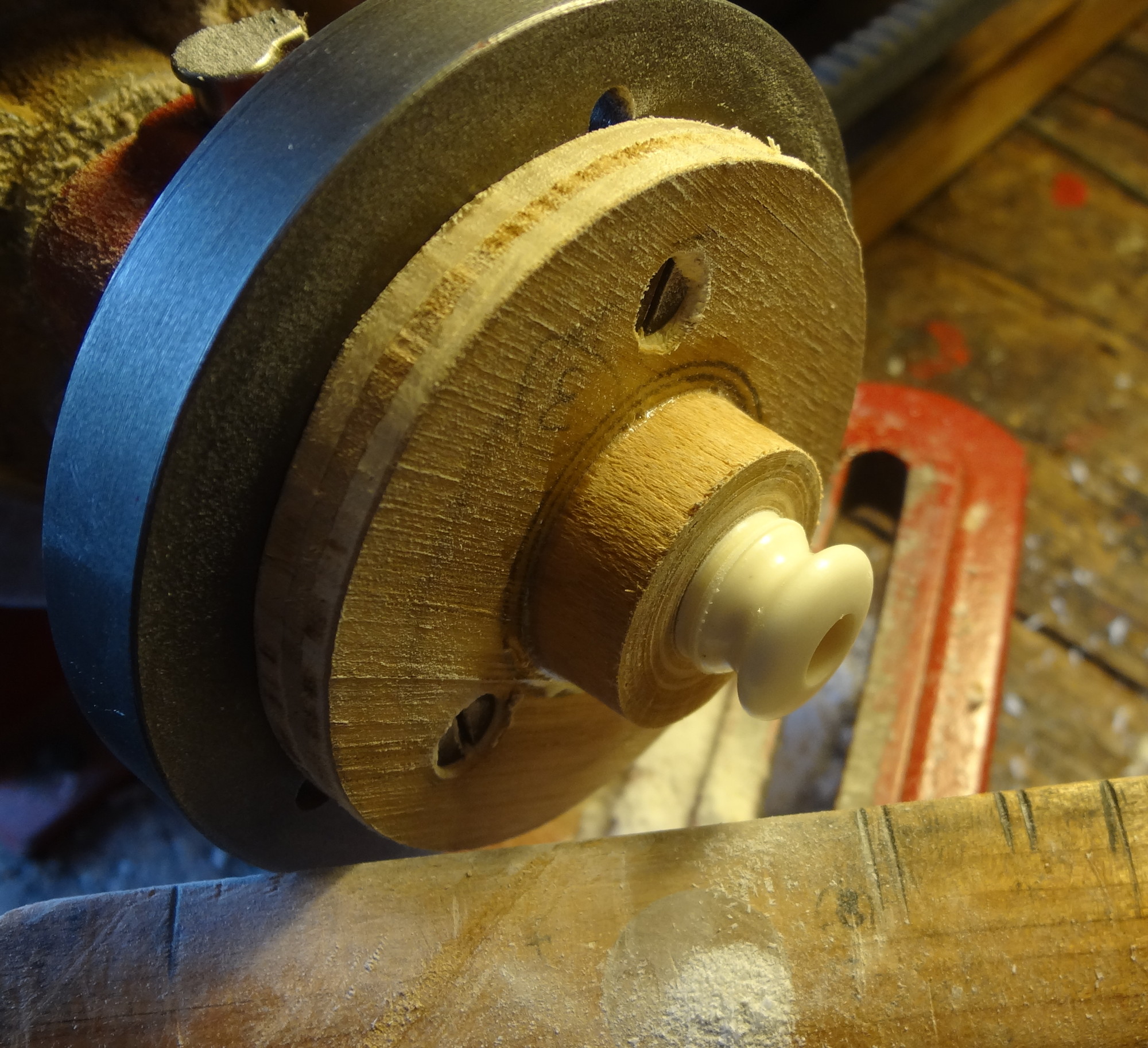
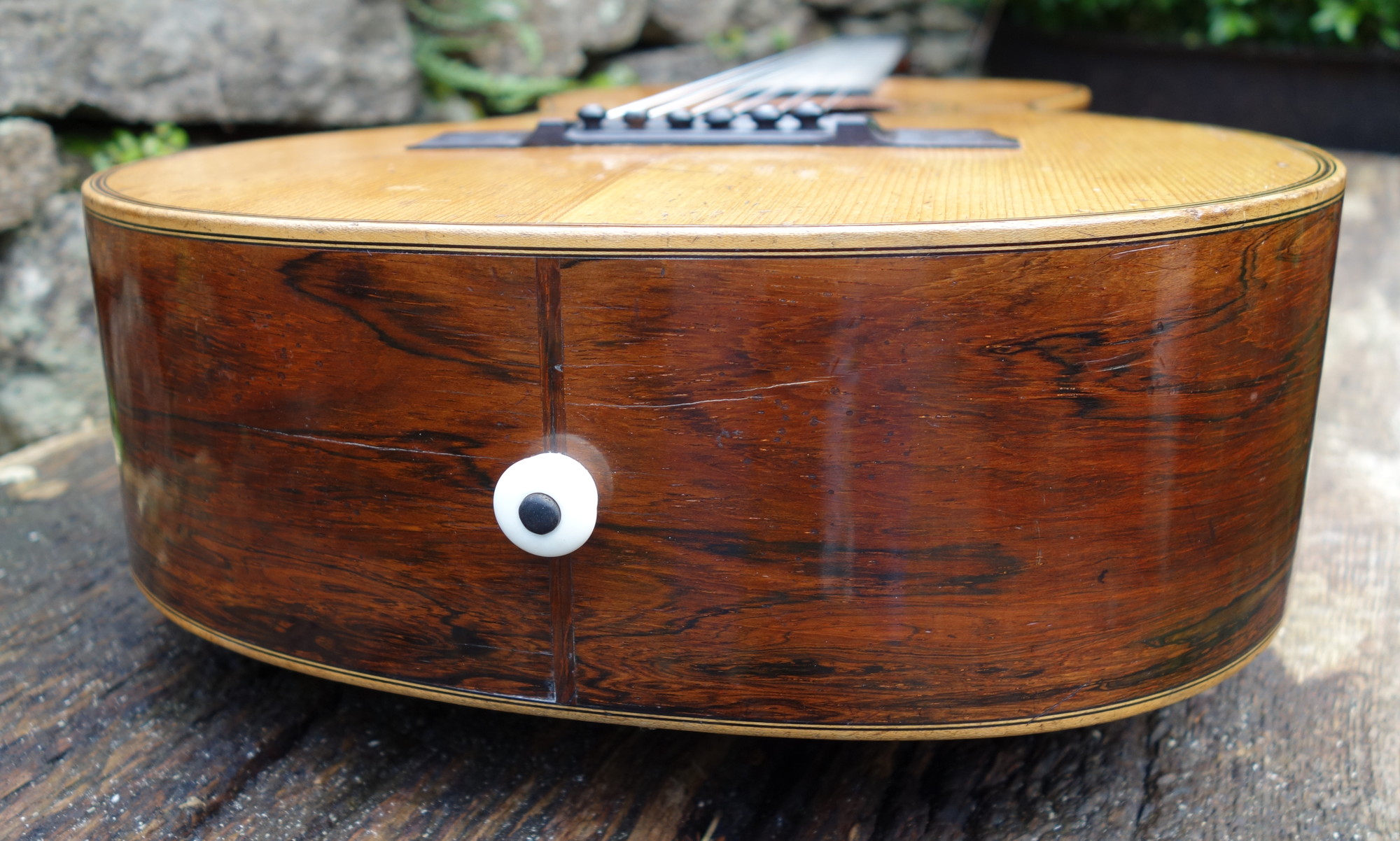
The ivory strap button on the stern of the guitar was broken and only a small fragment remained. Using the fragment as a guide, and referring to photographs of other Ashborn guitars, I was able to re-create the strap button in bone. The button is held in place with a tapered ebony pin.
Finished in March 2020, the guitar is strung with Aquila Alabastro 19th century guitar strings. It sounds wonderful.
Although Asborn's factory was in the USA, he was born in England. The owner of the guitar would like to hear from anyone who knows about his life in England.
Dimensions:
String length: 610 mm
Overall Length: 917 mm
Width of upper bout: 224 mm
Width at waist: 182 mm
Width at lower bout: 289 mm
Height at upper bout: 90 mm
Height at lower bout: 92 mm
Nut width: 48 mm
weight: 1.165kg
A Guiot Guitar

As Restored in 2014
A small guitar, highly ornamented with ebony and mother-of-pearl, purchased from an auction. It is a beautiful guitar with Brazilian rosewood back and sides. The owner wishes it to be restored to play. Below is the story of that renovation.
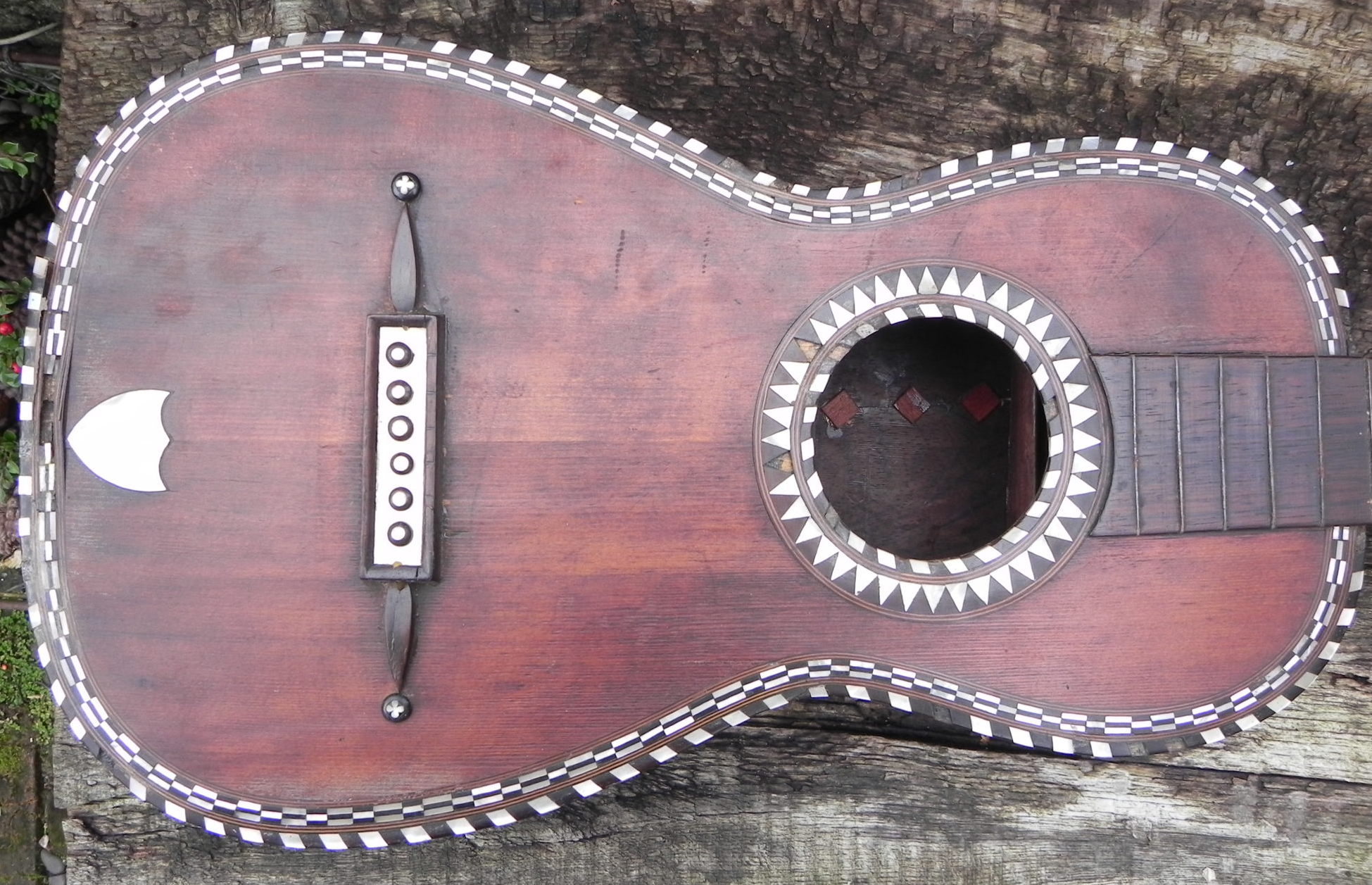

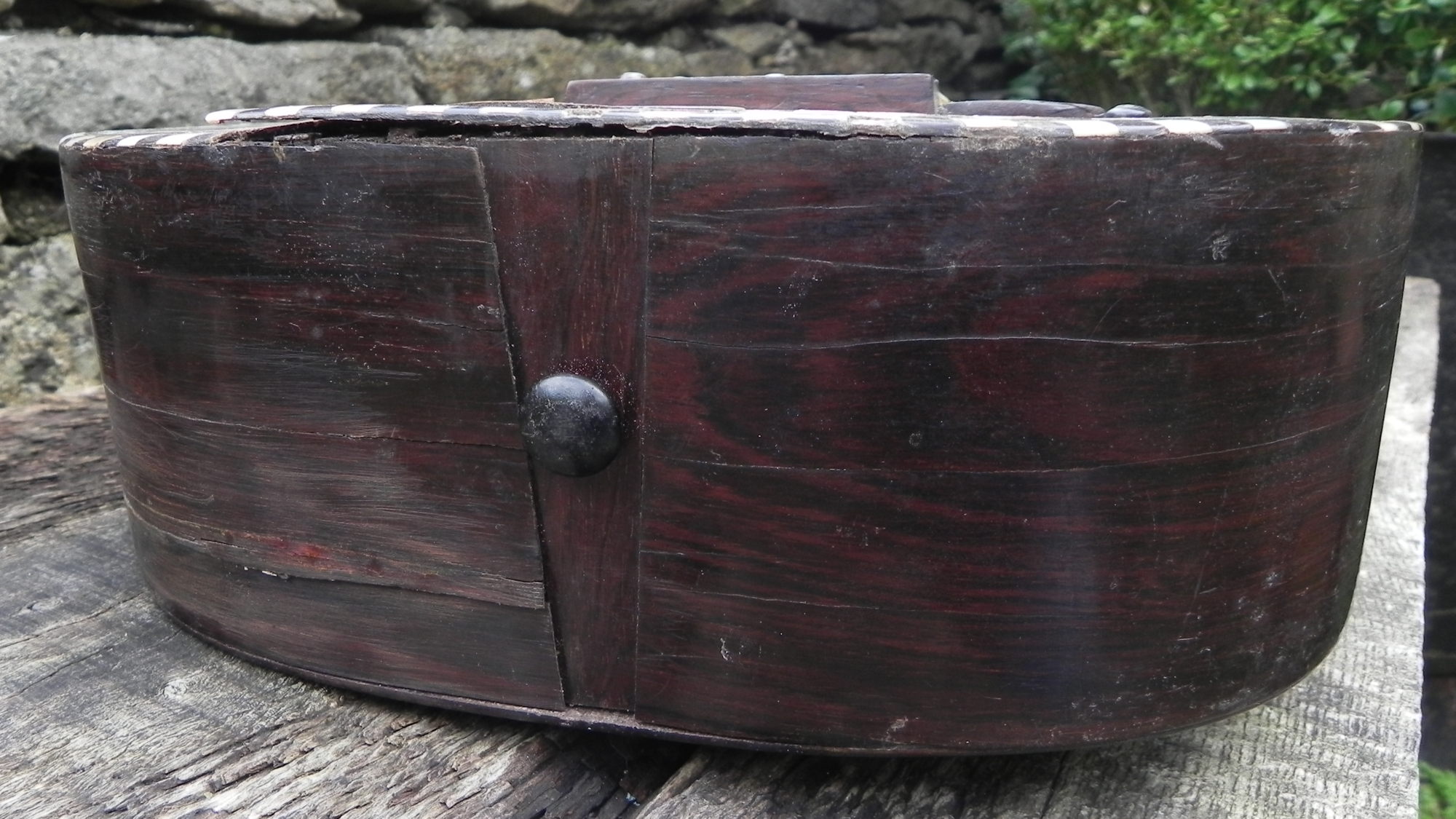
The guitar arrived in a very delicate state, the ribs are split and loose, the neck is not well attached, the back is coming away in places and it is shedding ebony and mother-of-pearl decoration. The instrument is weak and floppy and care is needed to move it. There is no label.


Two photos taken by a digital camera inside the guitar before the back was removed give a hint of the internal work that will be needed.

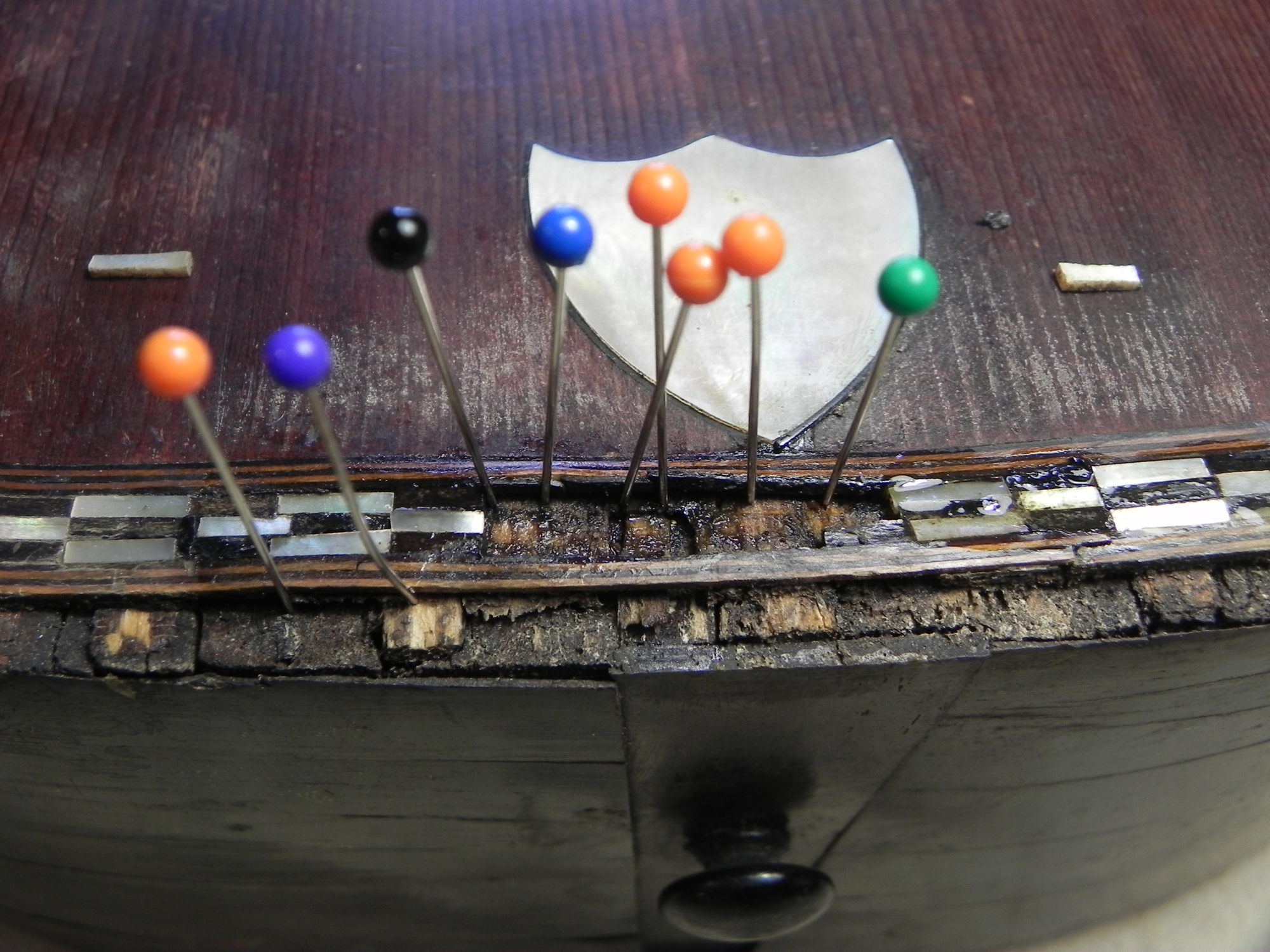
Before attempting any major repairs, one area of loose ornamentation needs work. Bits of decoration are falling away here and a temporary gluing will keep everything safe. Hide glue works very well with the mother-of-pearl.

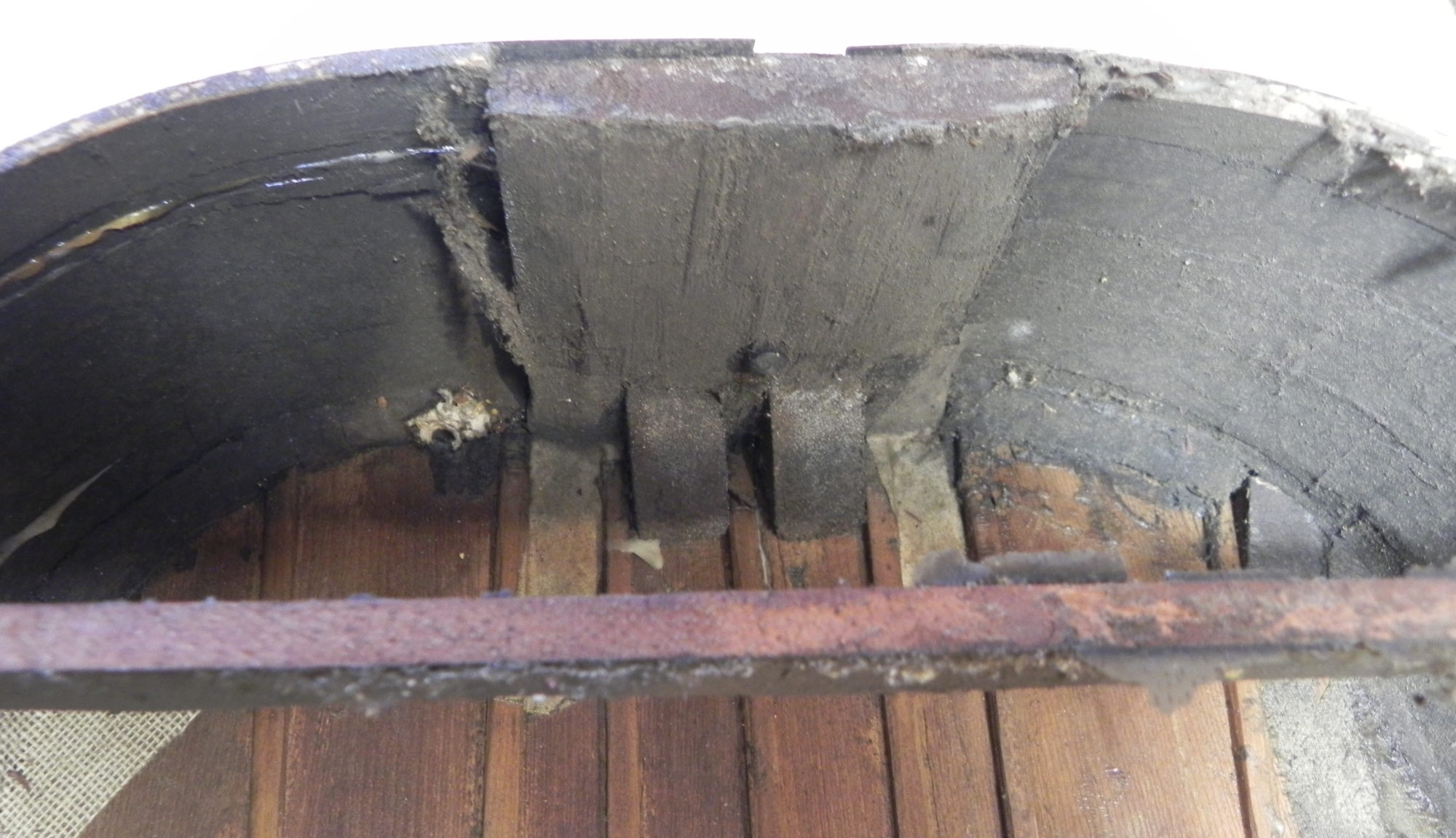
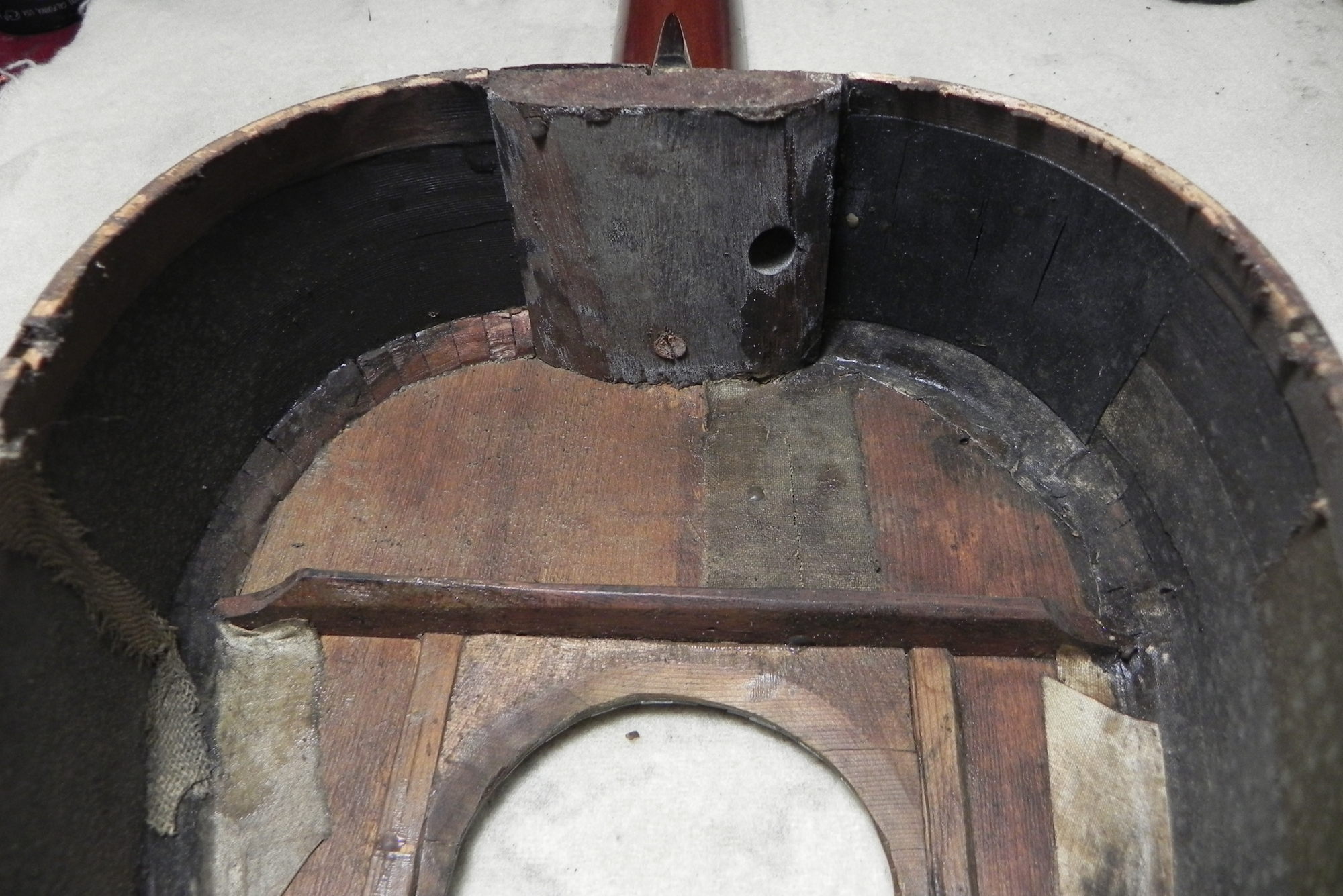
The back removed. Three of the four back bars have remained with the body. Both the upper and lower bouts show an incredible amount of linen reinforcement. The upper bout has some dark wood veneer attached to the inside of the rib. All these old repairs will need to be replaced or renewed. Their added weight will be detrimental to the tone of the guitar. Note the rather large hole on the right side of the mahogany front block. It appears to have been made by a huge boring insect.
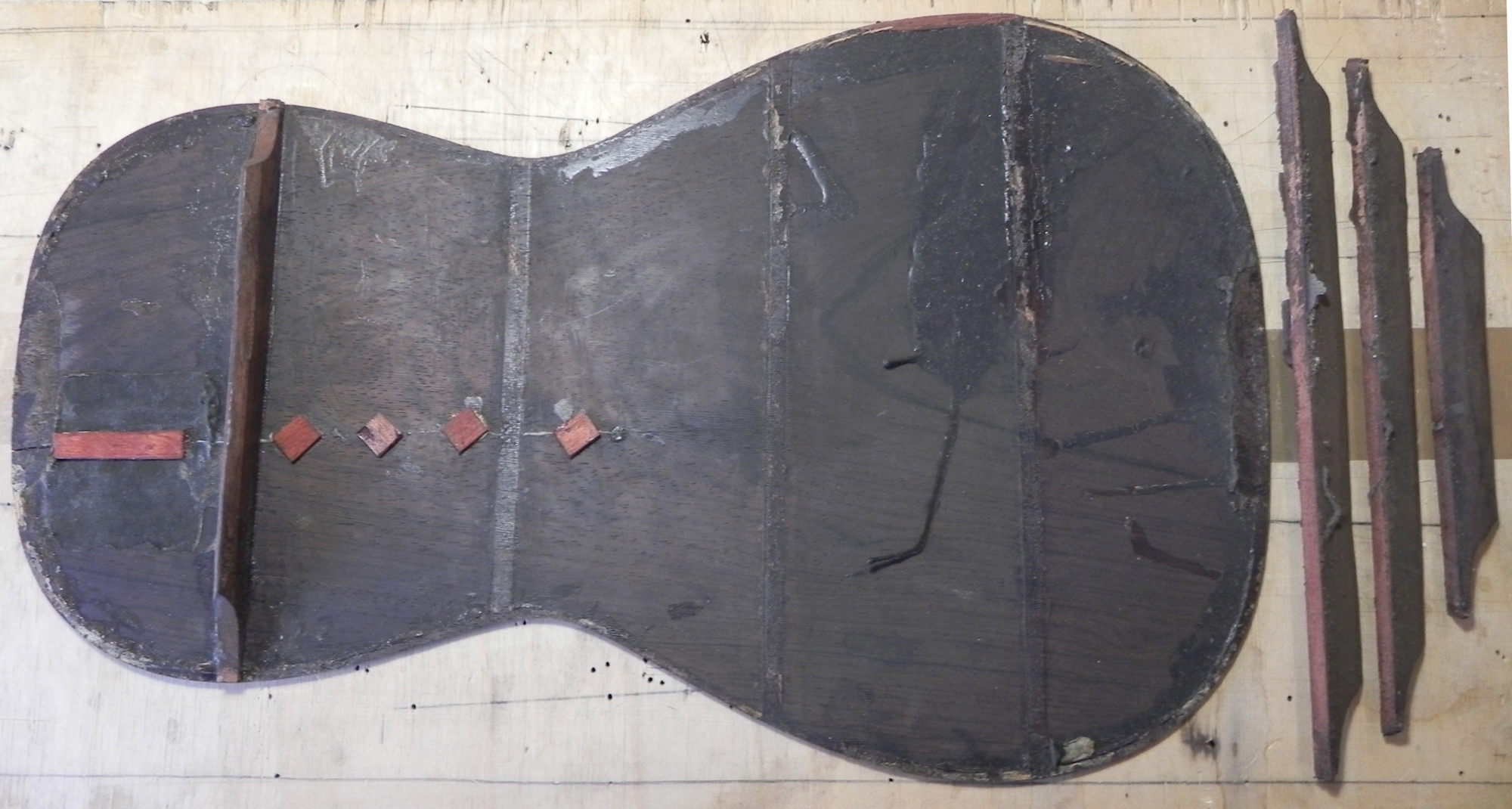
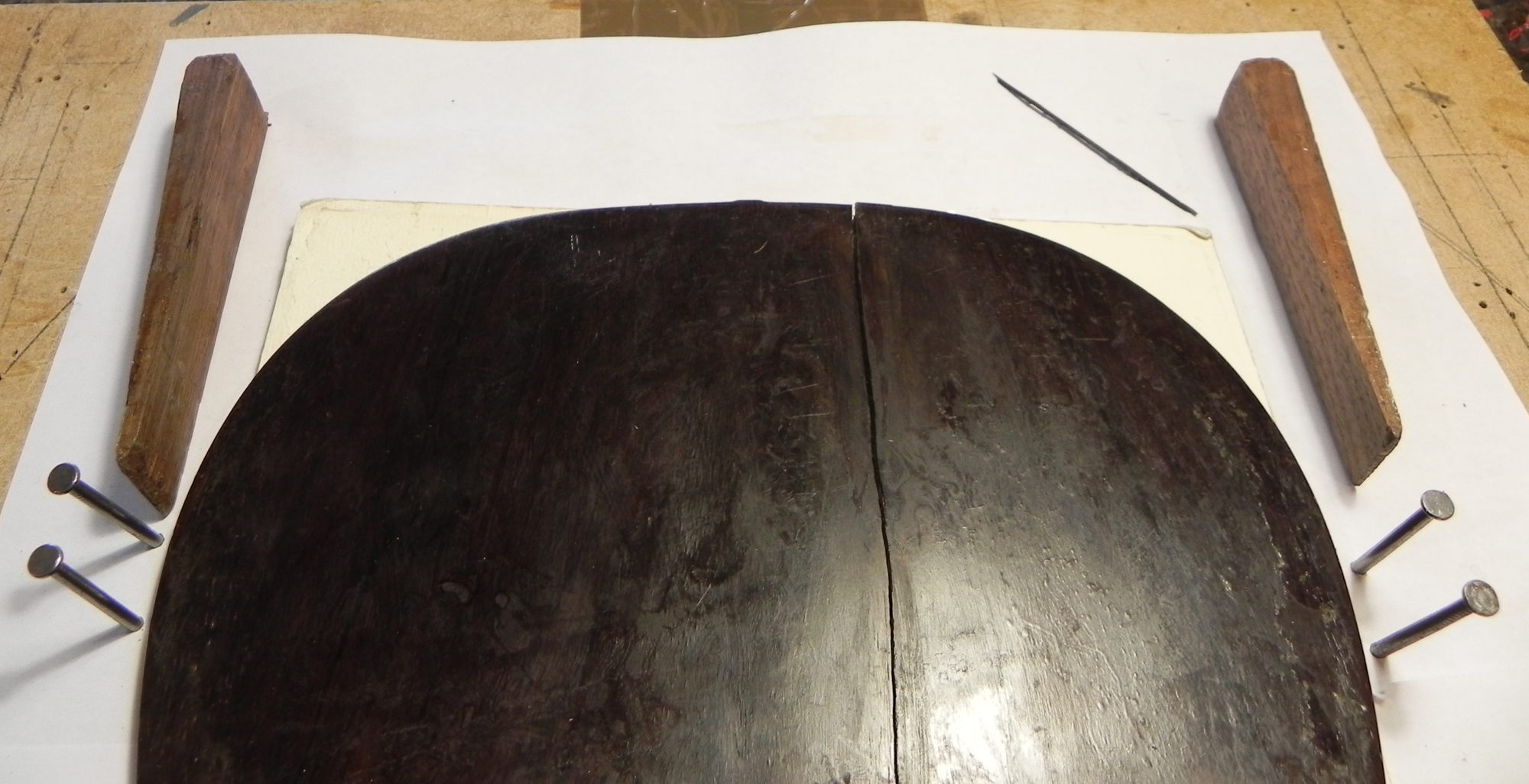

Starting with the easiest work, I began on the back. I cleaned it and closed the big crack adding reinforcement dots. I reused the original mahogany bars and added my label. The original bars are about 7mm wide and have a maximum height of 20mm.
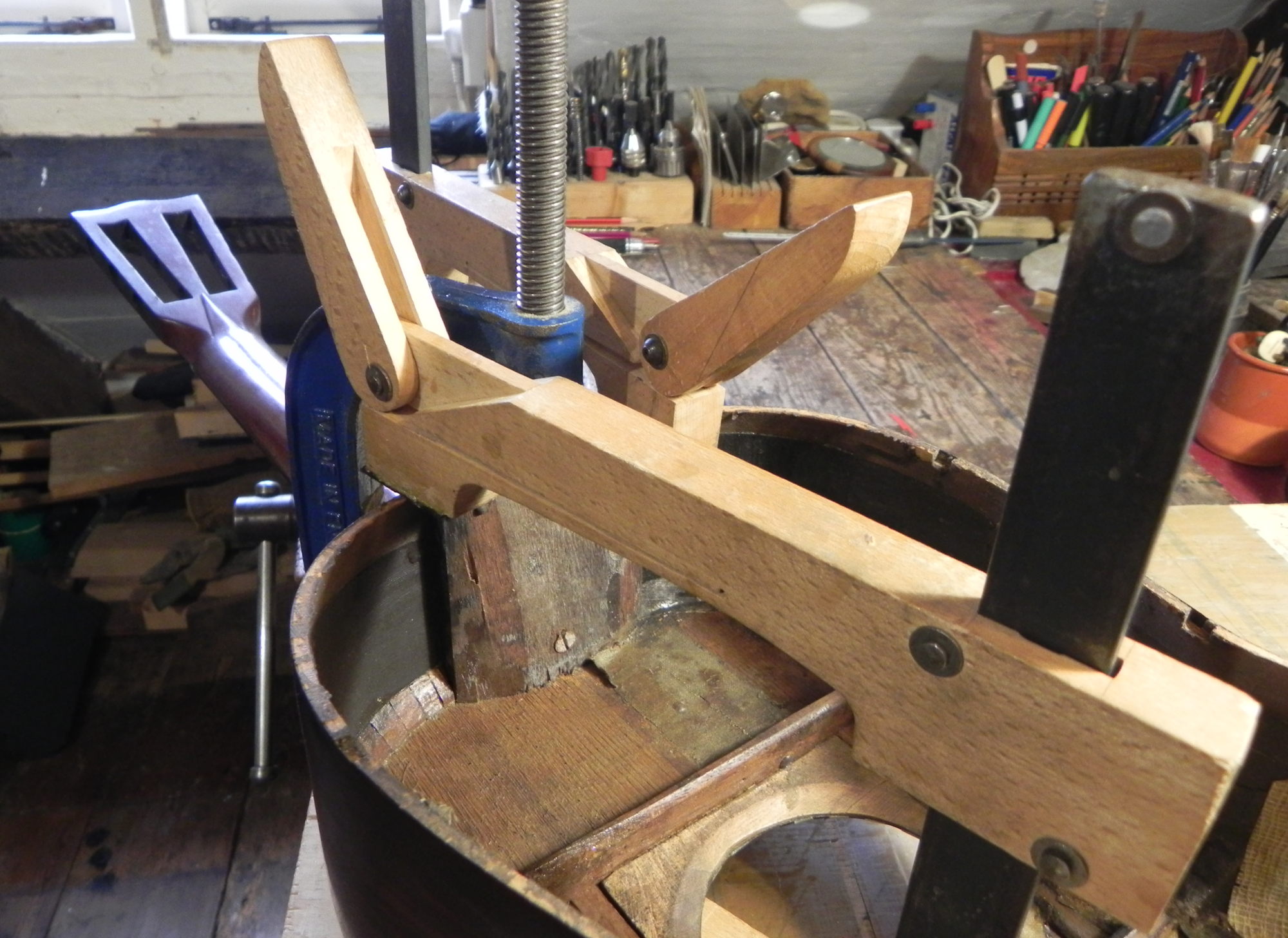
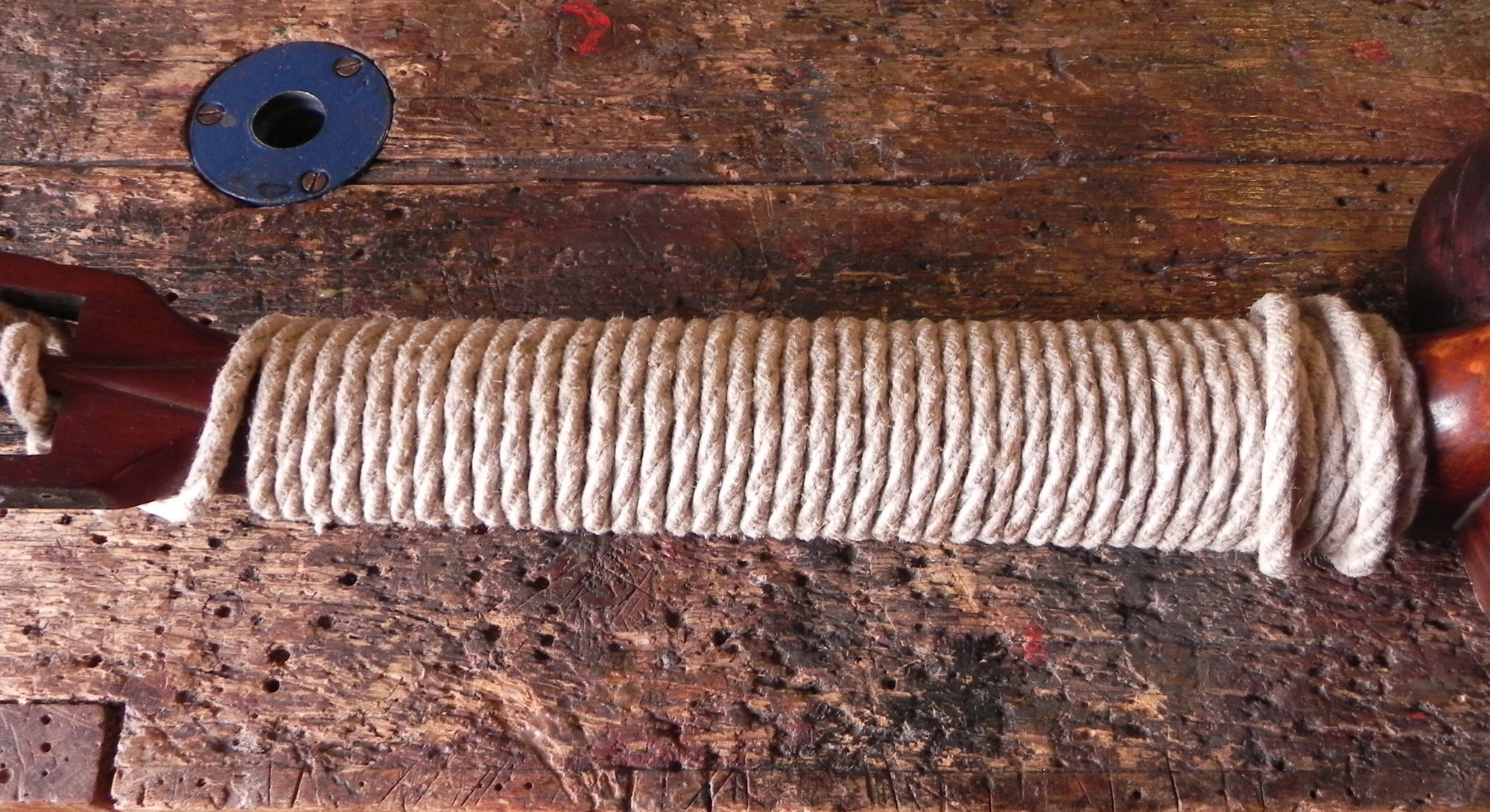
Both the front block and the rear block were not well attached to the soundboard. Here the front block is being glued to the soundboard. The fingerboard is coming adrift from the neck and rope is used as a clamp. The guitar began to feel a little less fragile with the neck well attached. However it remained on a work board during the entire repair so that it would not have to be lifted.
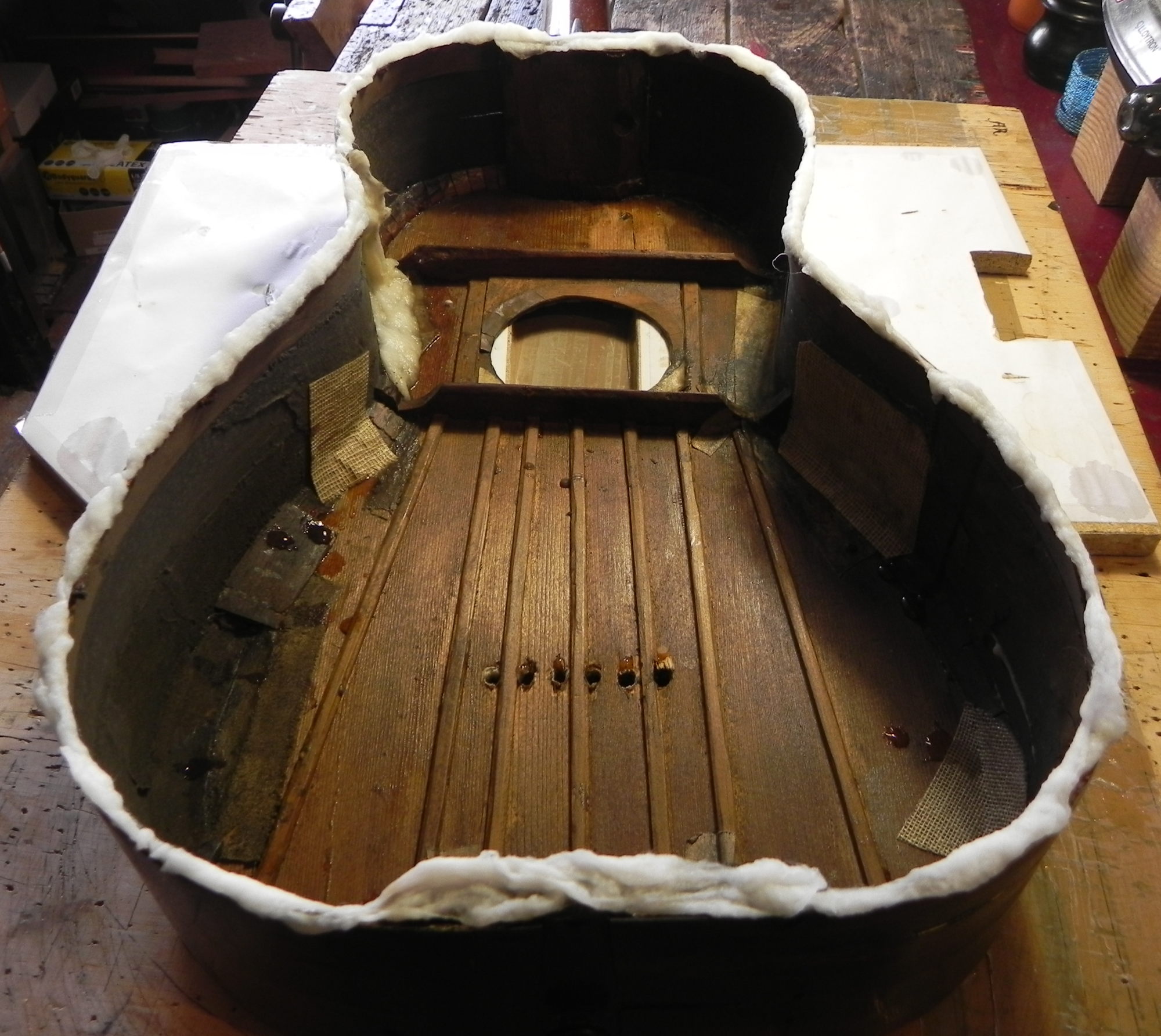
Old glue being softened where the back will meet the ribs and lining. Also the first part of the linen and cloth rib reinforcement being softened for removal.


Here is a large modern white patch and below it four layers of linen. The guitar will definitely sound better with all this removed.
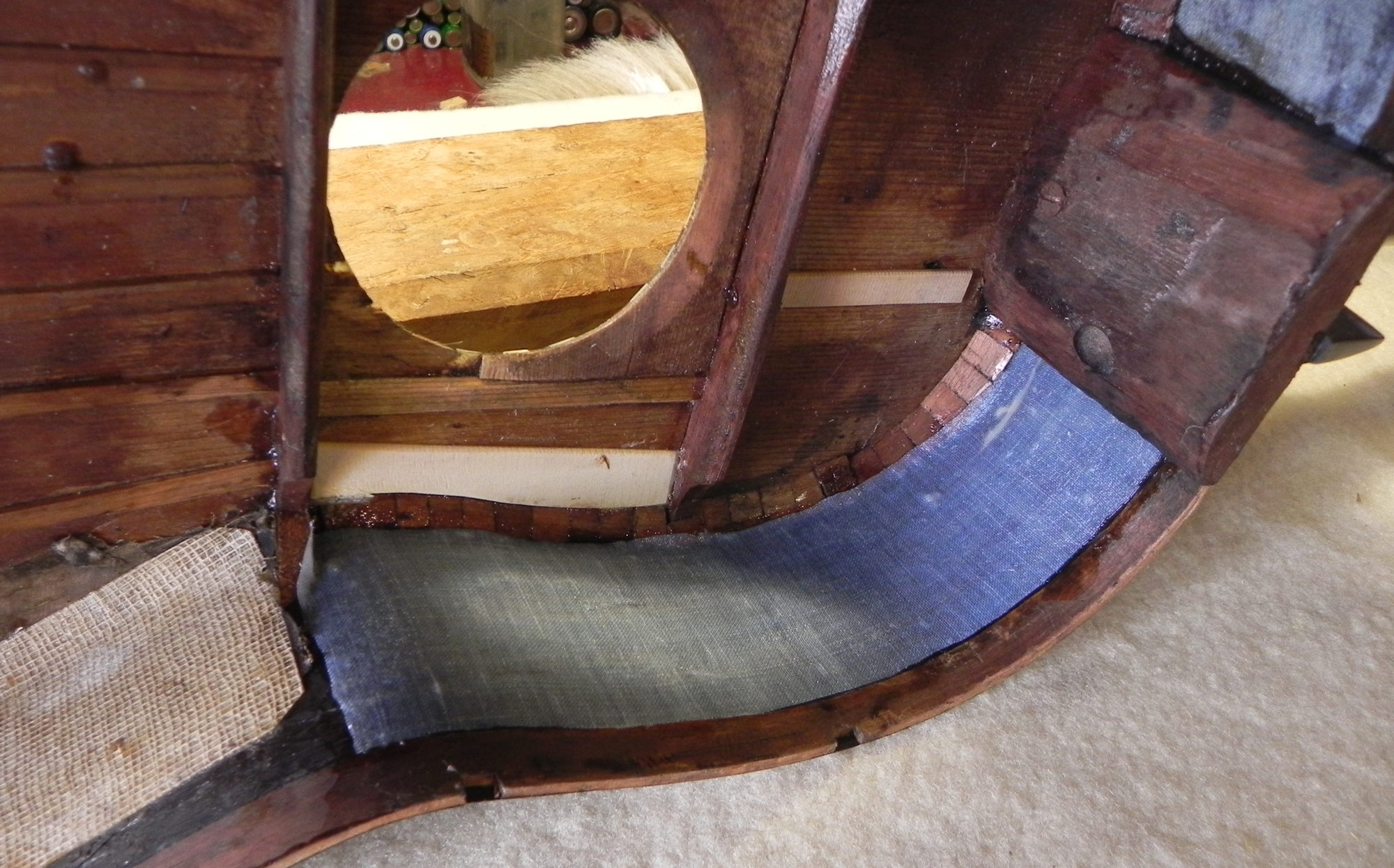

I removed the old cloth and veneer reinforcement in one sixth of the guitar at a time, adding new linen at each stage. This way only a small proportion of the guitar was under re-construction at any time. As I did this, the guitar grew stronger and stronger. Eventually, the new linen reinforcement covered the entire inside of the sides of the guitar.
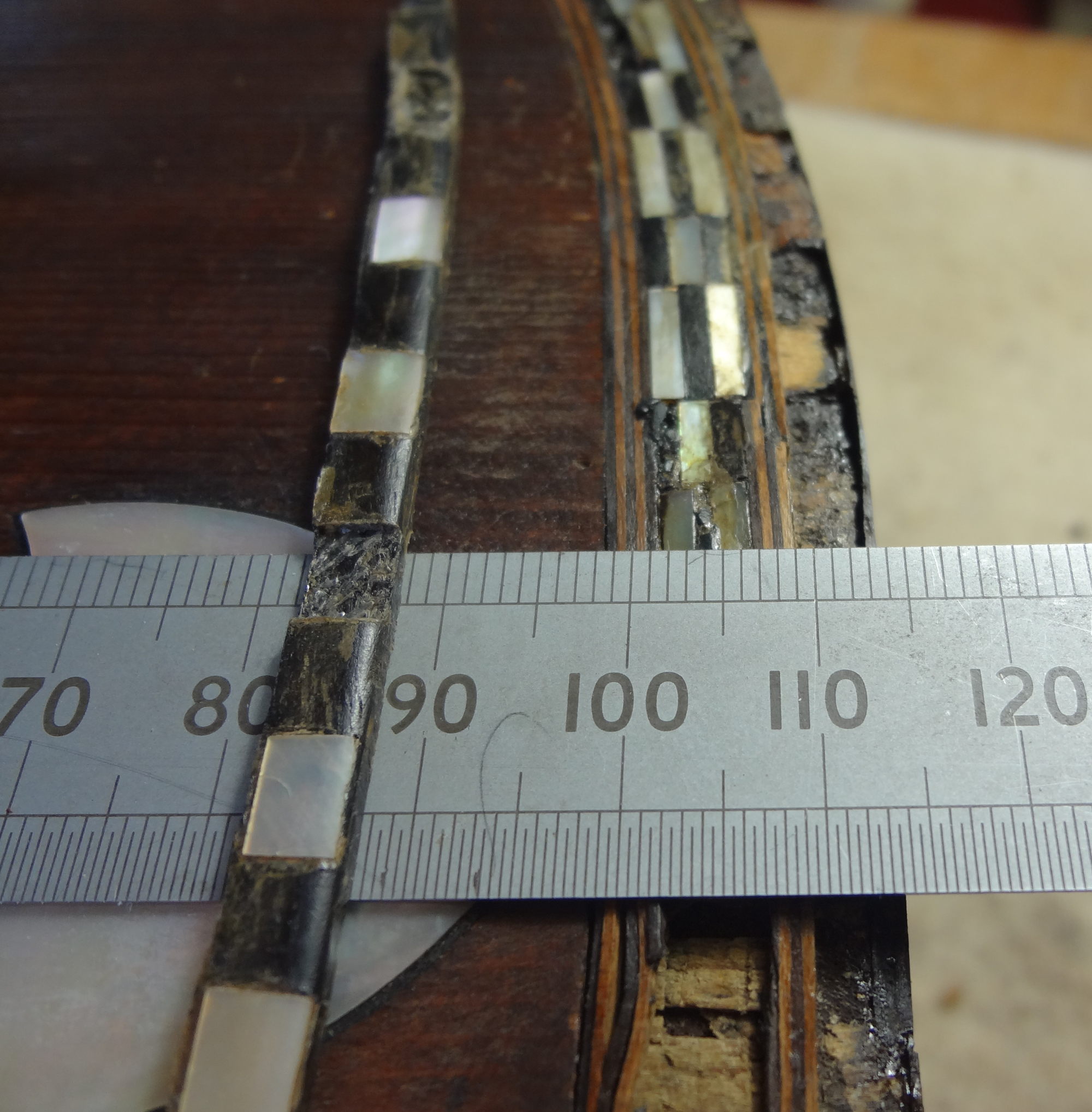
Great care had to be taken with the ribs as they were so exceptionally thin, sometimes less than 0.5 mm. Also, here is one piece of ebony and mother-of-pearl decoration that came away as one piece and is ready to be returned to the guitar.
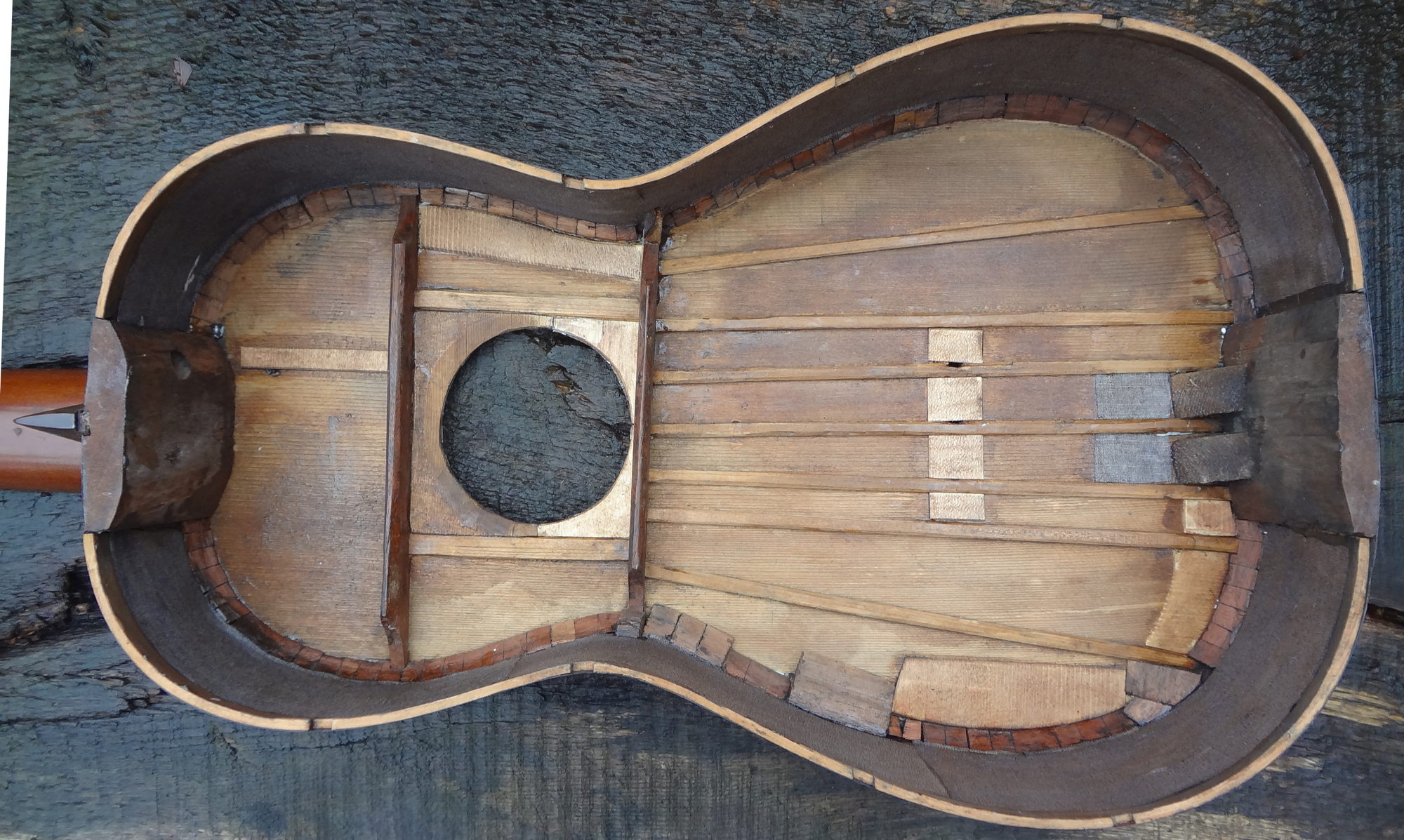
The work on the inside of the guitar is complete and the linen toned down so it will not be immediately visible from the sound hole.
The next job is to replace the missing ebony and Mother of Pearl (MoP) inlaid decoration. I have decided to do this before replacing the back as I want that to be the absolute final stage. There is also a small repair in the front bout where the astonishingly thin rosewood has perished and a patch will be let in.

I found no easy way to replace the MoP. 16 trapezoidal pieces of MoP were needed along with one ebony trapezoid. 7 each of MoP and ebony rectangles were missing. I cut the pieces on a pedal fret saw.
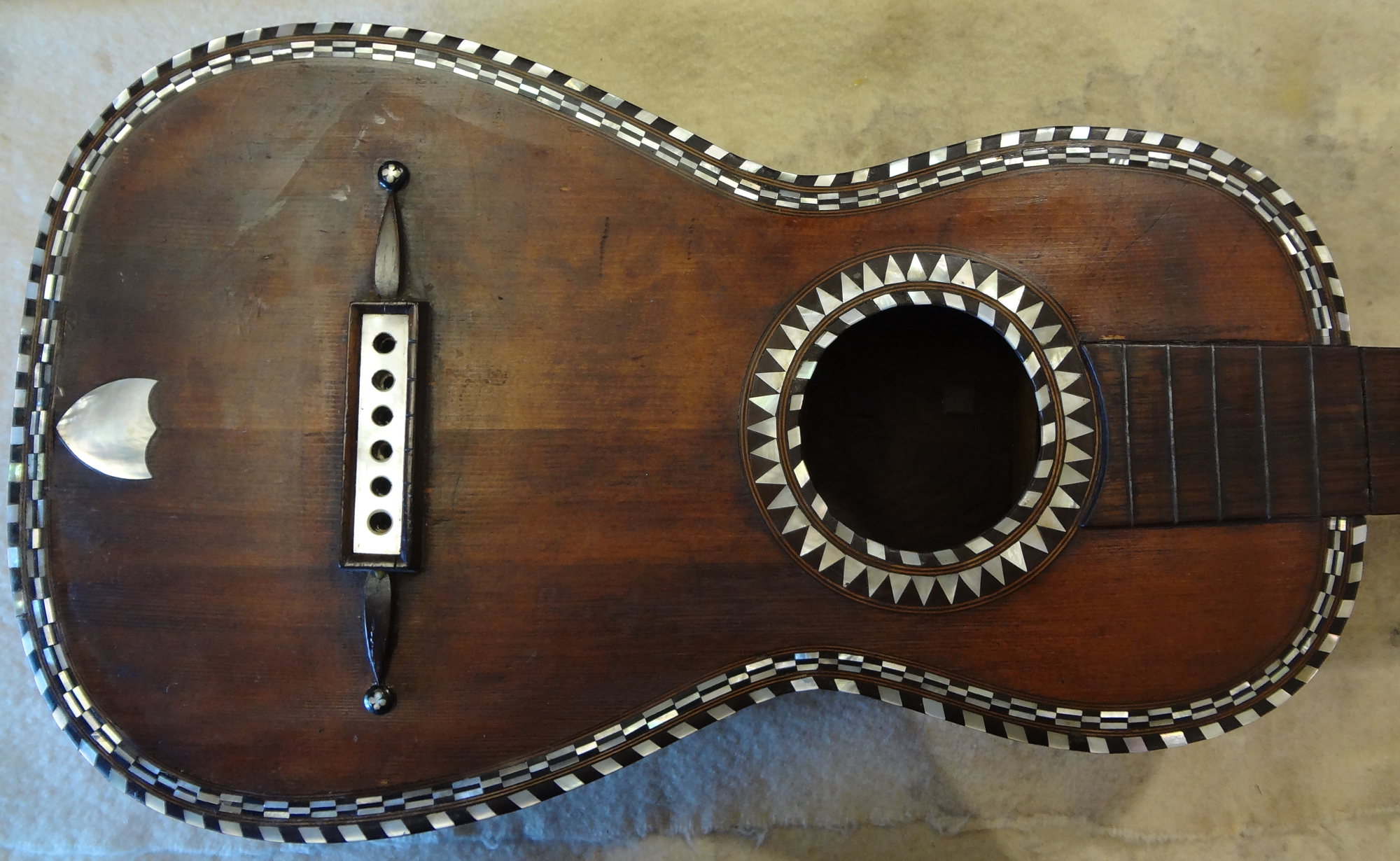
With the all work done on the body, the back was attached. When all was dry and I was satisfied, the guitar was strung with Savarez light gauge strings (White Card). The guitar sounds full and rich, astonishing for its small size. The picture of the finished guitar is at the top of the page.
Dimensions:
String length: 632 mm
Overall Length: 935 mm
Width of upper bout: 207 mm
Width at waist: 169 mm
Width at lower bout: 275 mm
Height at upper bout: 87 mm
Height at lower bout: 93 mm
Nut width: 43.6 mm
weight: 1.09kg
A French Guitar
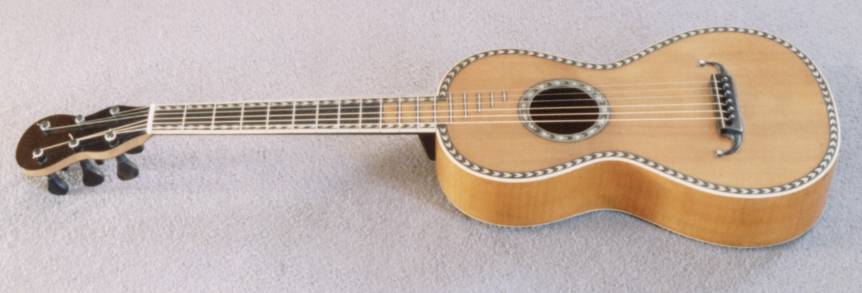
This guitar is probably French and was made in the early half of the nineteenth century. Note that the fingerboard does not go over the soundboard. It arrived in the workshop with broken bars, many cracks, a large split along the joint of the soundboard and no peg head or pegs. The owner chose to have the instrument restored to playing condition and asked for turned wooden tuning pegs that were probably on the instrument when it was made.

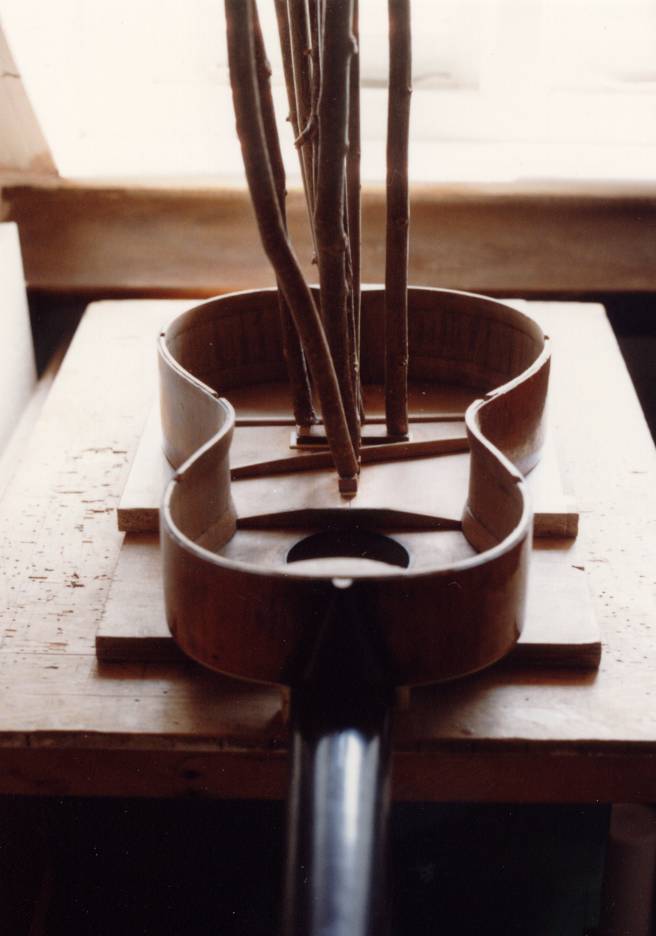

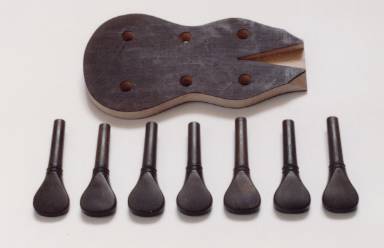
The guitar as it arrived, repairs in the workshop and the new peghead and pegs.
19th Century Guitar
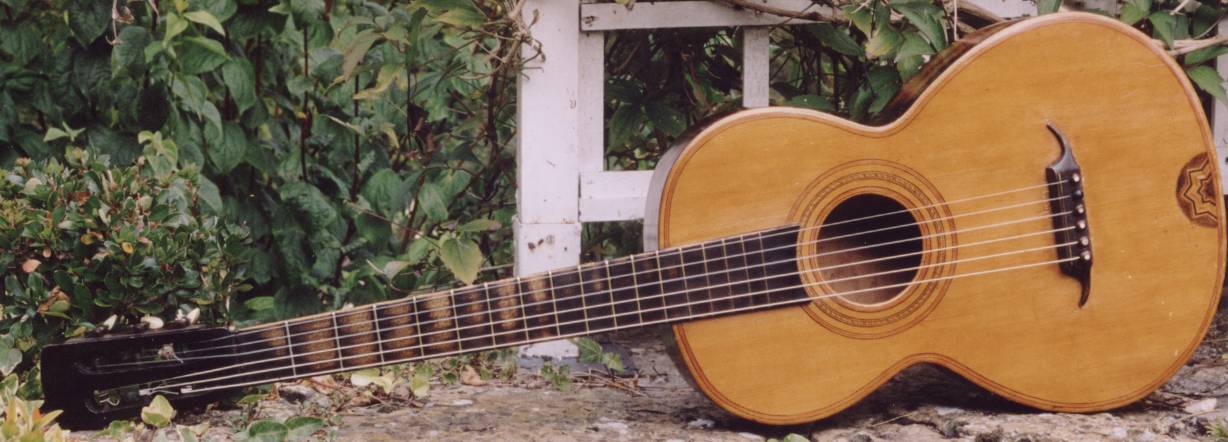
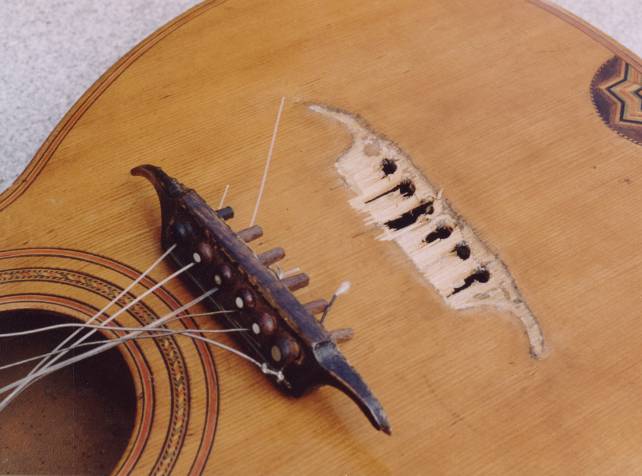
Above the repaired guitar. Bridges often come off, but usually not with quite so much wood torn from the soundboard. The guitar shows many charachteristics of the 19th century but also evidence of being a less expensive instrument. The fingerboard is not ebony but stained maple and the white wood has begun to show through the stain.
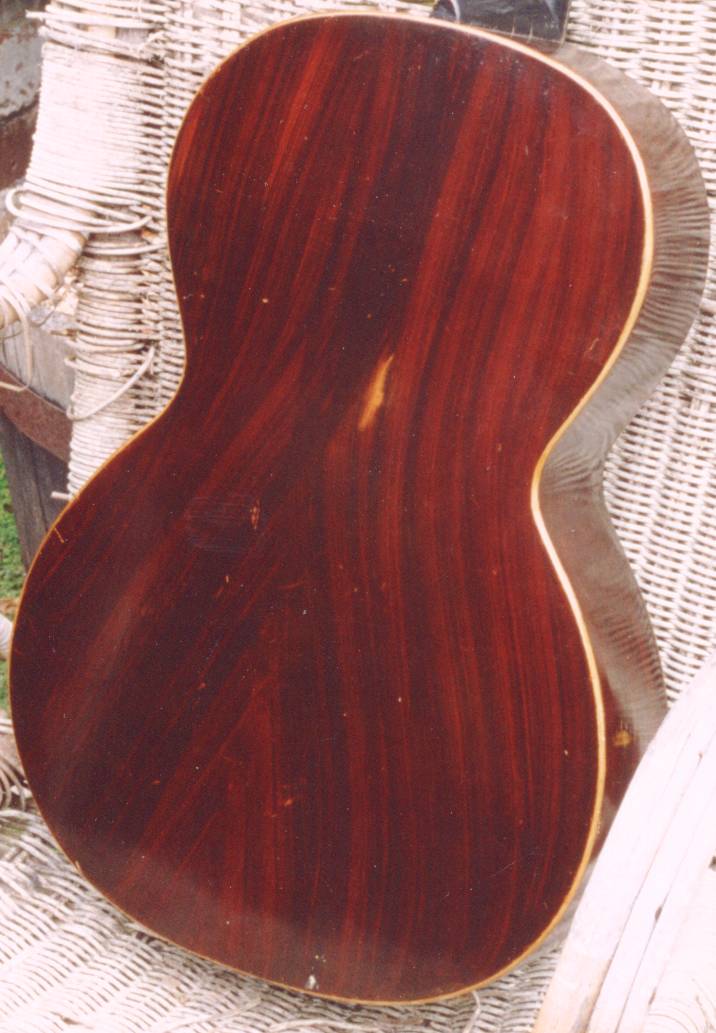
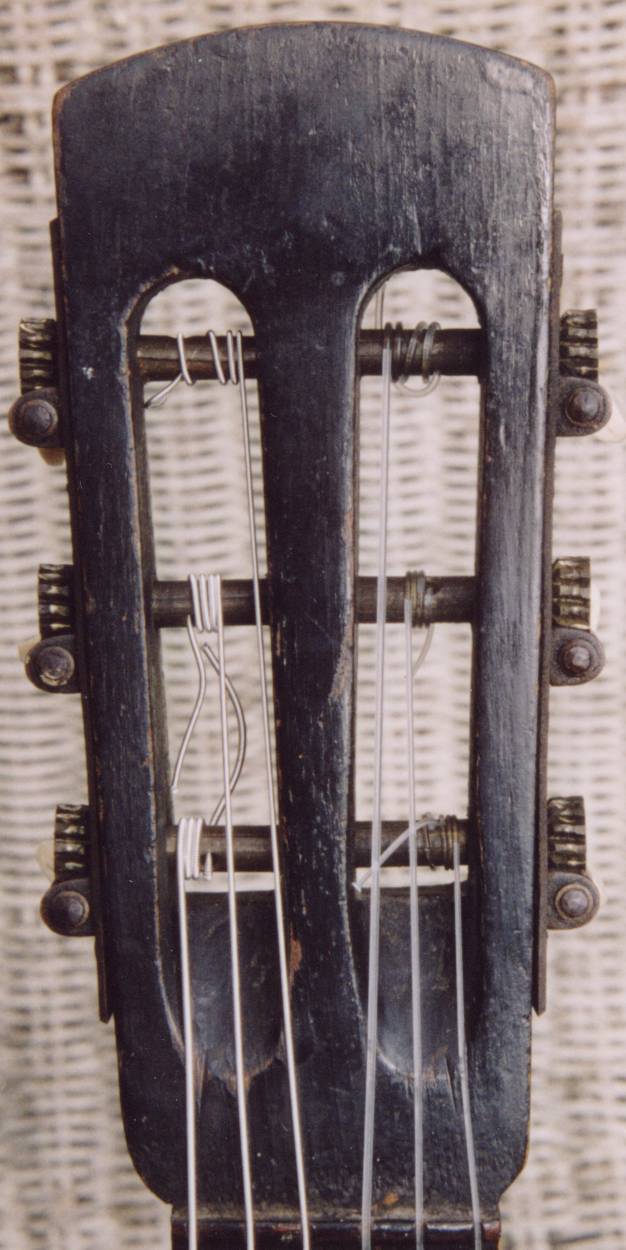
The back appears to be mahogony or rosewood but is again maple. It is painted brown and combed to give a grained effect. One light spot can be seen where the paint has worn away. Although inexpensive materials have been used, the craftsmansip is of a high quality except for the head. On the head, note the shoulders (at the bottom of the picture) are different shapes and that the strings do not lie nicely over the ramps. The woodworking is crude and this could replace an earlier head.
Swedish Guitar 1896
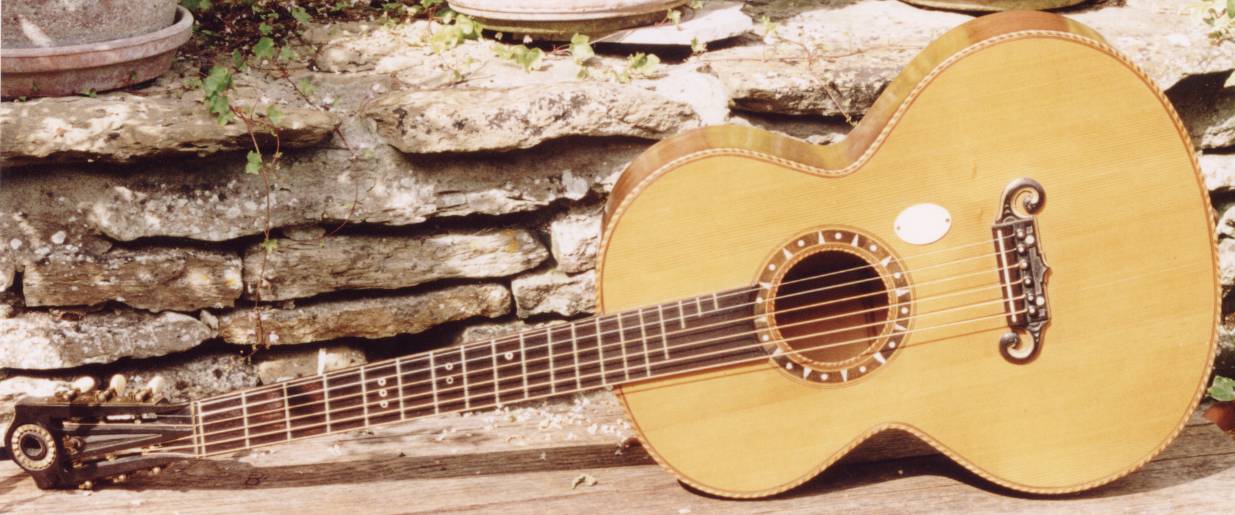
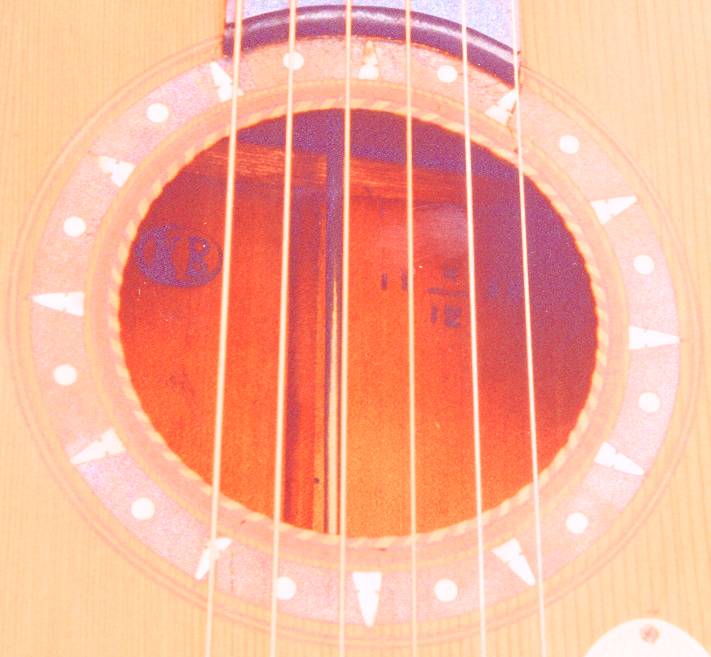
Only minor repairs were needed on this guitar. The guitar has been in the family for over 100 years and was brought by the family from Sweden. Note the slanted frets. Click on the small soundhole above and the enlarged lightened picture allows the brands inside the guitar to be read. The makers initials are KB, in an ellipse, and the date is 4/12 96 or April 12, 1896.


I have been contacted by a guitarist in Sweden who says the maker is Karl Blomqvist, who also made violins. He sent photos of the maker and his workshop.
A Painted Guitar
This guitar belonged to the owner's father who played it everyday. He was not the first to play it judging from the condition of the body.
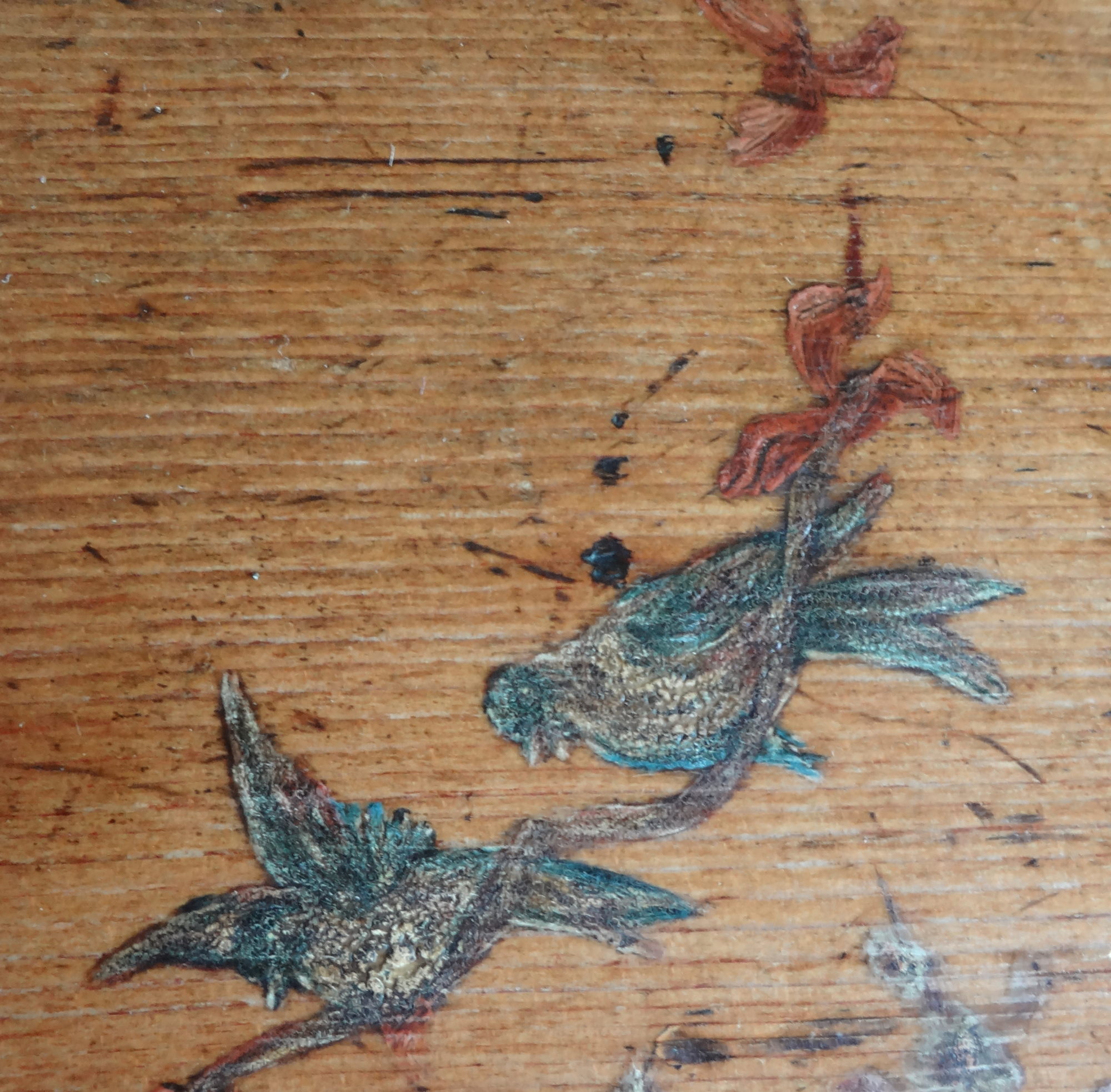
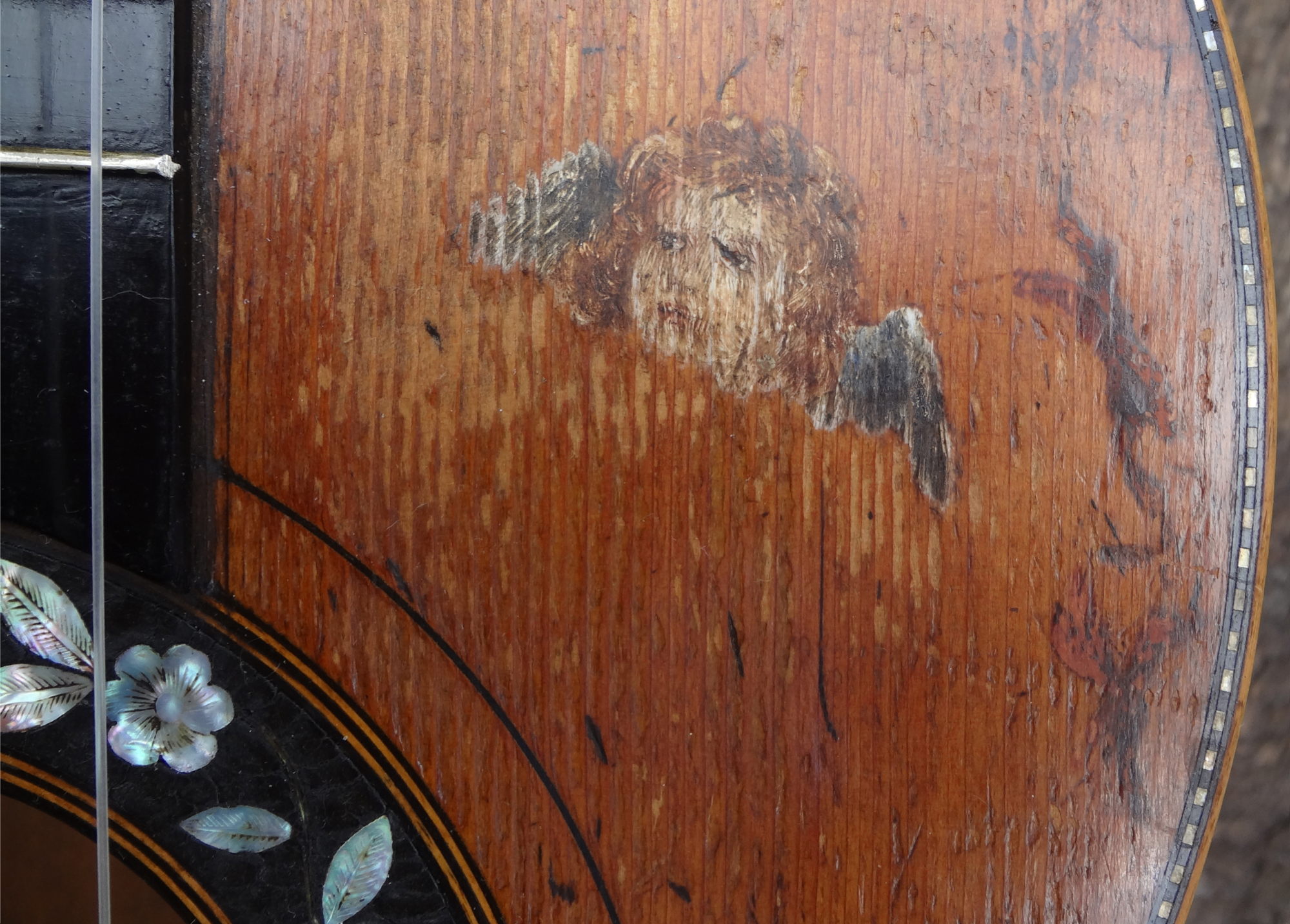
The body appears to be decorated with transfers, but on close inspection the figures are small oil paintings of angel faces, birds and vines. The paintings, and the entire guitar including the fingerboard, are varnished. This varnish was applied after the guitar had been in use for some time as some of the wear on the soundboard has received varnish. The fingerboard wear has gone through this varnish.
Even before the paintings were added, the guitar was beautifully decorated. The edging of mother-of-pearl and ebony is tiny and tasteful and the engraved and tinted mother-of-pearl is very beautifully done.
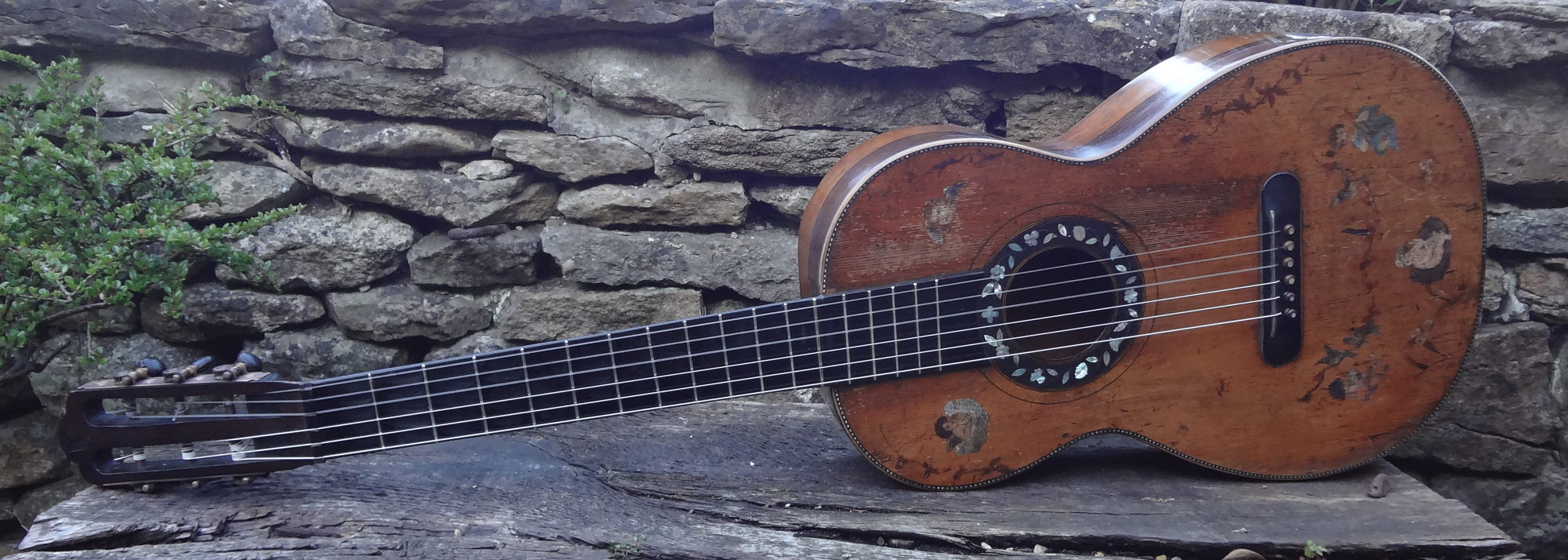

There is no label on the guitar but it is certainly 19th century. It has a small body with a wonderful tone typical of these small guitars.